
Last updated October 17, 2026
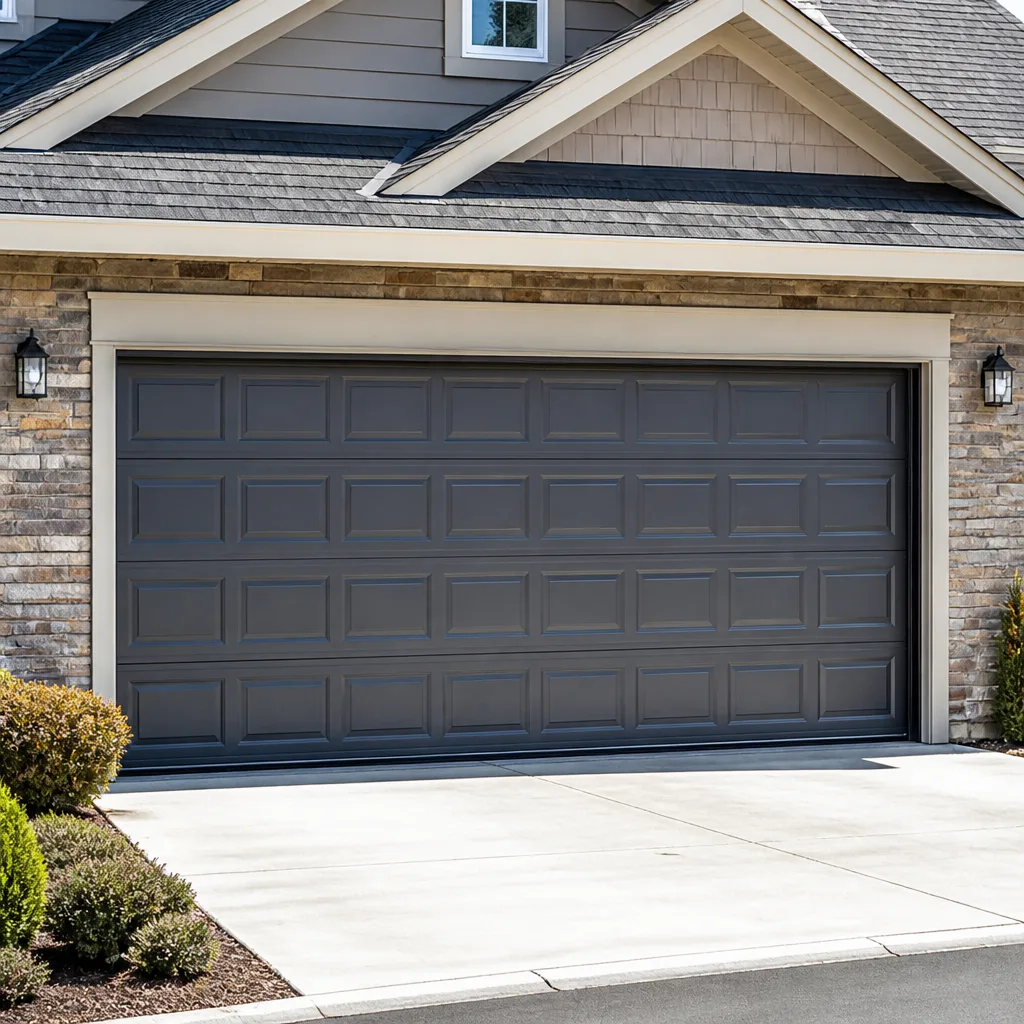 Raised-panel steel
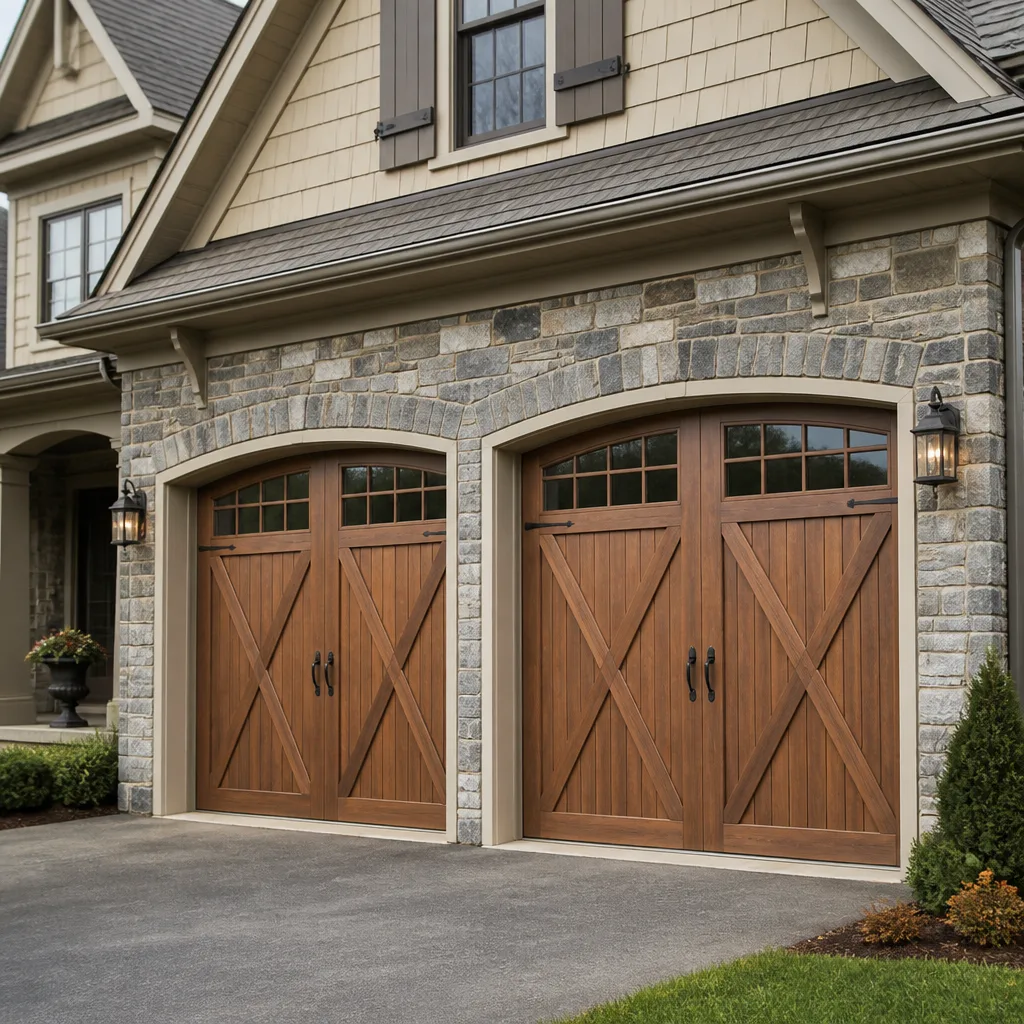 Carriage house
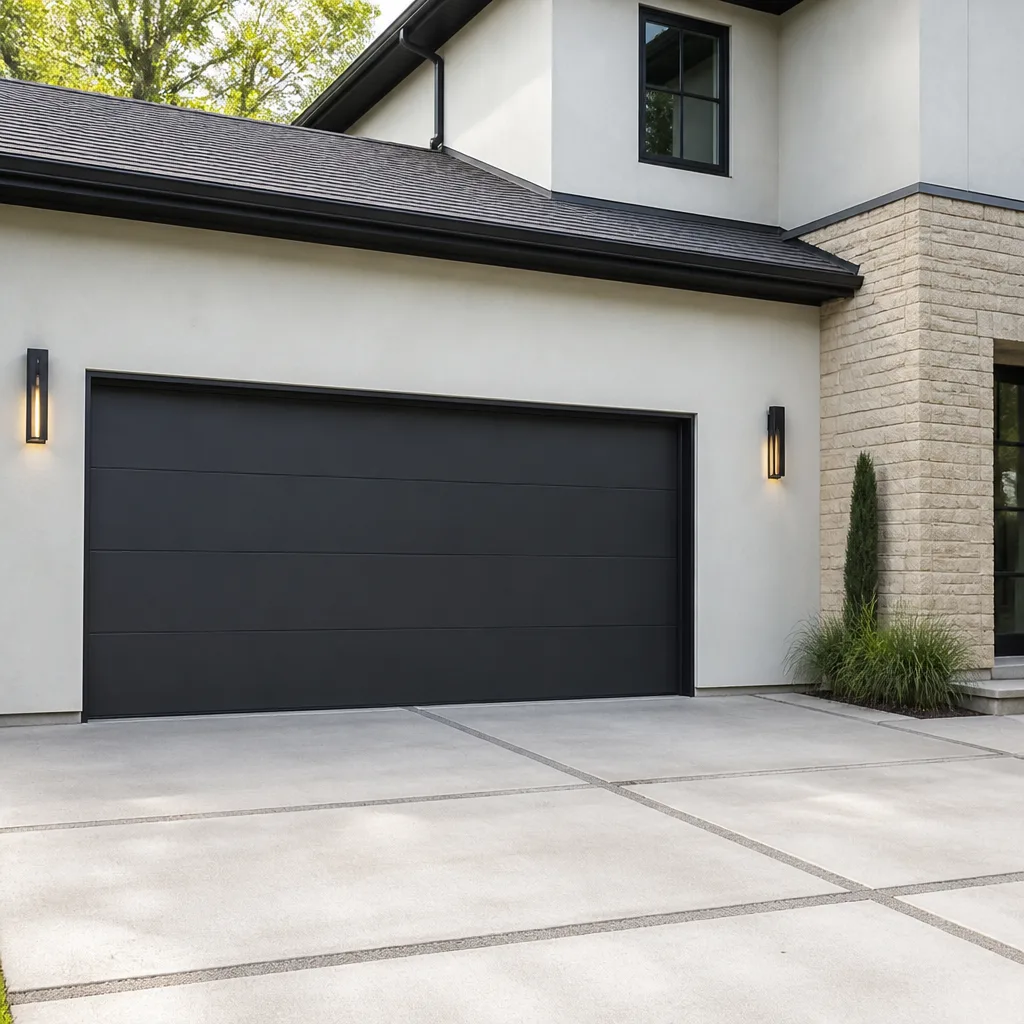 Modern flush
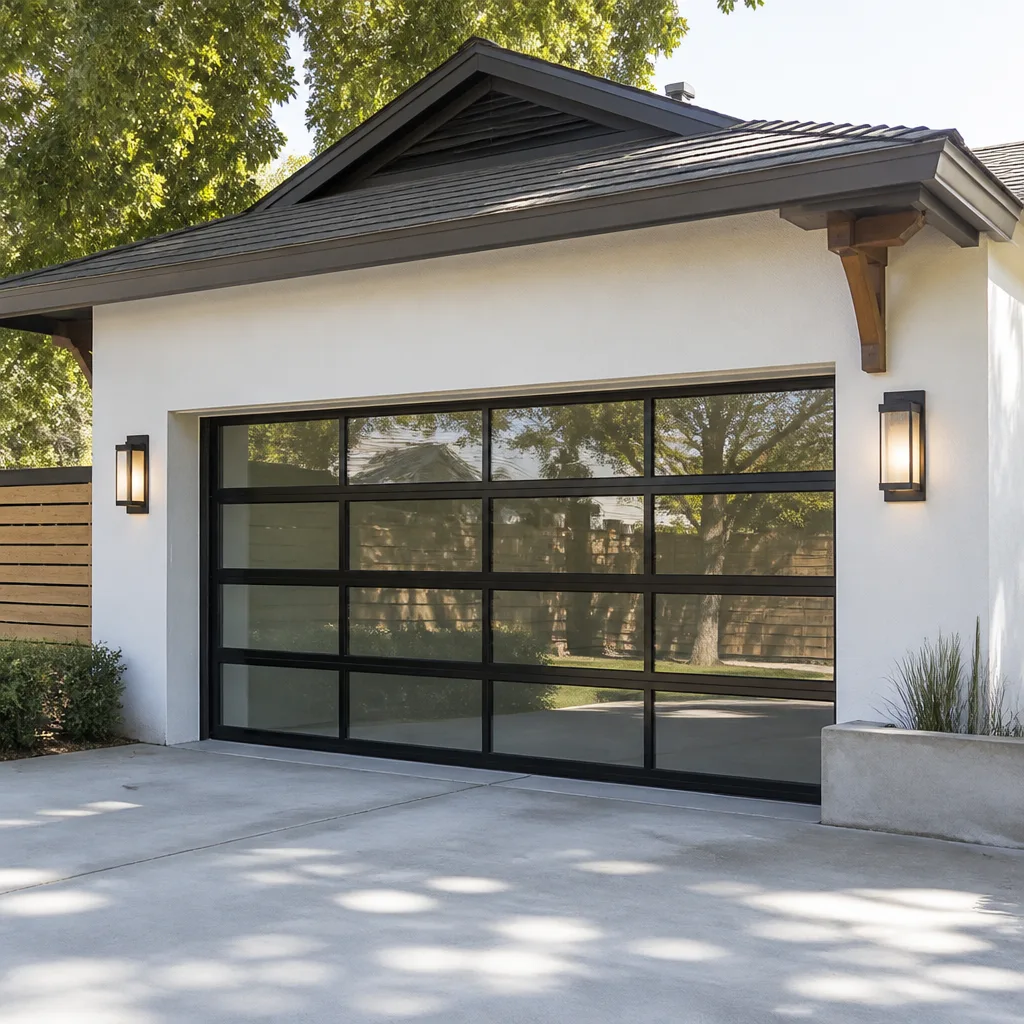 Full-view glass
 LiftMaster openers
 Chamberlain openers
Full 25-point door and opener safety check with every visit - springs, cables, rollers, tracks, and your LiftMaster or Chamberlain opener included
You get a price before we start. It does not change when the truck arrives.
Get your free estimateGarage Door Repair Maintenance Checklist for Orlando Homeowners
Most garage door maintenance advice skips the part where Orlando is different. The standard guidance says to lubricate your springs twice a year. That works in Ohio. It fails here, where afternoon thunderstorms push salt-heavy humidity through your garage every single summer day, and the lithium grease you applied in May is breaking down by July. This checklist is built around what Orlando’s climate actually does to your door, in the order it attacks, and complements our Garage Door Warning Signs: A Orlando Homeowner’s Reference Guide. You’ll learn the three checks most generic guides miss, why they matter more than the rest of the list combined, and how to keep a dated record that will help with insurance claims and resale disclosure if you ever sell your home.
Styles & brands we work with
Quick Answer
A garage door maintenance checklist for Orlando homeowners should include a 90-day summer inspection of rollers, hinges, and springs; a pre-hurricane-season track and balance check in late May; a post-summer bottom seal compression test in September; and a dry-season repaint window for steel panels in November through February. The goal is to catch weather seal wear and corrosion before a $12 part becomes a $400 cable replacement that requires Garage Door Repair services.
Table of Contents
- Why Orlando’s Climate Breaks Garage Doors Differently
- The Orlando Seasonal Maintenance Calendar
- The Five Components That Degrade Fastest in Central Florida
- How to Test Bottom Seal Compression the Orlando Way
- Lubrication: What to Use and What Accelerates Rust Here
- The Printable Maintenance Log Format
- Common Mistakes to Avoid
- When to Call a Professional
- Frequently Asked Questions
- The Bottom Line
Why Orlando’s Climate Breaks Garage Doors Differently
Orlando sits in a humid subtropical zone with a twist: daily convection thunderstorms from June through September push relative humidity above 85 percent for hours at a time, often within minutes of a clear afternoon. That means your garage door hardware doesn’t just get wet occasionally. It gets wet, then hot, then wet again, in a daily cycle that accelerates corrosion on bare metal parts. Salt from Atlantic moisture, even 50 miles inland, adds an electrolyte that speeds up what would otherwise be slow surface rust.
We’ve worked on doors in Orlando neighborhoods like Baldwin Park and College Park where the same Genie opener model lasts a decade with routine care in a dry climate but shows motor capacitor failure within six years here. The failure usually isn’t the opener’s fault and it’s not usually the motor. It’s corrosion on the limit switch contacts and oxidation on the circuit board traces, both driven by the humidity cycle.
Here’s what the daily cycle looks like on your hardware. Morning heat bakes the garage, driving out moisture that accumulated overnight. The afternoon storm drops air temperature fast, creating condensation on metal parts that are still warm. That condensation sits. The next morning, heat bakes it off. Over a summer, that’s about 120 wet-dry cycles, each one leaving behind a microscopic layer of oxidation.
The practical takeaway: in Orlando, corrosion is not slow background noise. It is the main event. Your maintenance schedule should treat metal inspection as a 90-day task during summer, not a twice-yearly courtesy check. This is the single biggest correction we make for homeowners moving to Orlando from drier states.
The Orlando Seasonal Maintenance Calendar
Most maintenance guides give you a list of tasks with no order. Here is the calendar we recommend for Orlando specifically, built around the three weather windows that cause the most damage and the one dry window that’s safe for paint, with more guides & resources available on our blog.
- Late May, pre-hurricane season: Test the full travel cycle with the opener in manual mode. Listen for grinding or hesitation. Check all eight roller wheels for flat spots, especially the bottom two rollers, which carry the most weight when the door is moving. Tighten all track bolts, paying attention to the vertical track brackets at the top of each side. If you can move the track more than an eighth of an inch by hand, it needs tightening. Check the emergency release rope for fraying. Hurricane season in Orlando means high winds, and a door that’s misaligned or loose in its track is more likely to bind or jump during a pressure change when a storm passes overhead.
- June through August, every 90 days: Reapply a thin coat of white lithium grease to the torsion spring, the hinges, and the roller stems. Wipe the old residue off first with a dry rag. Don’t use WD-40, which is a water displacer, not a lubricant, and will strip the grease you already applied. Check the opener’s safety sensors for condensation inside the lens. In Orlando, sensor fogging happens so often after storms that we recommend a simple test after every heavy rain: wave your hand through the beam while the door is closing. If it doesn’t reverse immediately, moisture is the likely culprit.
- September, post-summer humidity check: This is the most ignored inspection in Orlando, and the one that catches damage before it compounds. Look at every hinge pin. Look for white or green powdery buildup, which is zinc oxide from the metal reacting with humid air. Look at the bottom seal, the rubber strip running along the base of the door. Press it with your thumb. If it feels spongy or if you can see light through gaps where the seal meets the concrete, replace it. Standing water from Orlando’s afternoon storms is the number one cause of seal compression loss. Once water gets under the door, it wicks into the bottom panel, and over one season that panel can start to delaminate.
- November through February, dry season: This is the only window in Orlando that’s safe for repainting steel panels or resealing wood doors. Humidity is low enough that paint cures properly and doesn’t bubble or peel. If your door faces south or west, that morning and late-afternoon sun is brutal on the paint surface. Look for chalky residue, which is the pigment breaking down under UV. A quality exterior acrylic applied in the dry season buys you another three to five years before the steel underneath is exposed.
The Five Components That Degrade Fastest in Central Florida
Not every part of your garage door ages at the same rate. In Orlando’s climate, five specific components fail on a predictable timeline, and knowing what to look for on each one is the difference between a $30 fix and a multi-hundred-dollar repair.
1. Bottom Weather Seal
The bottom seal is the first thing to go in Orlando, often within 18 to 24 months of installation. The rubber compound breaks down faster here because it sits in standing water on hot concrete after every afternoon storm. Physical signs: hairline cracks visible when you bend the seal back, a flattened edge rather than a rounded profile, and light visible under the door when it’s closed. On most Clopay and Amarr doors, the seal slides out of a channel at the bottom of the panel and replaces in under 15 minutes.
2. Torsion Spring
Even high-quality springs rated for 10,000 cycles, roughly seven to nine years of normal use, will show surface rust in Orlando within the first two years. Surface rust alone isn’t a failure point, but rust on the spring coil where it sits on the spring anchor bracket can create a stress riser, a point where the metal is slightly weakened and more likely to fracture under tension. Physical signs: uneven coil spacing, a visible gap where the spring meets the bracket, or a loud bang from the garage followed by the door not opening. That last one is the spring snapping. Garage door spring repair in Orlando is not a do-it-yourself project. The spring is under enough tension to cause serious injury. Call a professional.
3. Roller Wheels
Rollers on Orlando garage doors collect grit from humid air and the dust that blows in during dry-season afternoons. Plastic and nylon rollers resist corrosion but crack under heat load. Steel rollers rust at the bearing. Physical signs: a flat spot you can feel by rolling the wheel against your palm, visible rust on the bearing, or a door that shudders as it travels. If you hear a rhythmic thumping when the door moves, that’s a roller. Replace all of them at once rather than one at a time, since the others are usually not far behind.
4. Hinges
Hinges on the sides of each panel take repeated loading as the door transitions from vertical to horizontal travel. In Orlando, the hinge pins corrode first, especially on the lower two hinges, which sit closer to concrete and the moisture that evaporates off it. Physical signs: a green or white powdery residue around the pin, a squeak that persists after lubrication, or visible side-to-side movement in the hinge leaf. A seized hinge transfers stress to the panel itself, and on a Wayne Dalton or Amarr steel door, a cracked hinge mounting point means panel replacement, not just a hinge swap.
5. Safety Sensor Lenses
The infrared sensors mounted on the bottom of the door track are fragile in humid conditions. Condensation forms on the inside of the plastic lens, diffusing the beam and causing the opener to reverse randomly or refuse to close. Physical signs: intermittent operation that worsens after rain, visible fog inside the lens, or a sensor light that blinks in a pattern your opener’s manual identifies as a beam obstruction. The fix is often a simple lens cleaning, but a cracked housing lets moisture inside permanently and should be replaced.
How to Test Bottom Seal Compression the Orlando Way
Most guides tell you to check for gaps under the door. That’s the wrong test for Orlando. Gaps are the late-stage failure. The right test checks compression, meaning how hard the seal is pressing against the concrete. Standing water from afternoon storms finds its way under a seal that still touches the floor but no longer presses into it. Here’s how we test it.
- Close the door fully and let it settle for 10 minutes, which lets the seal reach its static shape after compression.
- Slide a single dollar bill under the seal at the center of the door. There should be firm resistance when you try to pull it out. If the bill slides out without resistance, compression is failing.
- Repeat the test at the left corner, right corner, and at any point where the concrete has visible cracks or spalling.
- Shine a flashlight inside the garage at night with the door closed, and look at the bottom edge from outside. If you see light in more than two spots, or a continuous line of light along more than two feet, the seal’s profile has flattened and it’s no longer following the concrete’s surface.
- Pour a cup of water along the bottom edge of the closed door. If water beads and stays outside, compression is still good. If water seeps under the seal and darkens the garage floor inside, that’s a failed seal, and in Orlando that means every afternoon storm is slowly wetting the bottom panel. This is the test we perform on every service call for garage door repair in Orlando, because seal failure is the single most common precursor to panel damage we see.
Lubrication: What to Use and What Accelerates Rust Here
Lubricant choice matters in Orlando more than in most places because the wrong product doesn’t just fail to lubricate. It actively accelerates corrosion. The most common mistake is using a penetrating oil or general-purpose spray on the torsion spring and hinges. Penetrating oils are designed to free stuck parts by thinning out old lubricant. They do that job well, but they also leave the metal surface with almost no protective film. In a 90 percent humidity garage, that bare metal starts oxidizing within days.
Use a white lithium grease aerosol, applied in a thin, even coat on the torsion spring, the hinge pivot points, and the roller stems. Wipe away excess with a dry rag, because a thick layer of grease collects the dust that blows into Orlando garages during dry-season afternoons, and that grit becomes an abrasive paste that wears the moving surfaces faster. For the track itself, do not lubricate it at all. The track is a guide rail, not a bearing surface, and any lubricant on a powder-coated track will attract dust and gum up the rollers’ path. In humid air, that gummed residue holds moisture against the metal and promotes rust along the track’s powder coat.
For the opener’s drive system: a chain drive needs a light machine oil on the chain links every 90 days during the summer months, wiping off the old black residue first. A belt drive needs no lubrication, and adding any type of grease will damage the belt’s rubber compound. If you have a Genie or Wayne Dalton opener and aren’t sure which type of drive it is, the manual will tell you in the maintenance section. A screw drive needs a light grease applied along the screw thread, but only after the old grease is cleaned off with a dry cloth.
The Printable Maintenance Log Format
Keeping a dated maintenance log serves three purposes in Florida. First, it creates a paper trail for homeowner’s insurance claims if storm damage or flooding causes garage door failure. Second, it documents that you performed reasonable maintenance if a spring or cable fails and causes damage, which can matter in a dispute about whether the damage was preventable. Third, in a resale transaction, a dated log tells a buyer’s home inspector that the garage door system has been cared for, which reduces the chance of an inspection finding that stalls the sale, as detailed in our How to Hire a Garage Door Contractor in Orlando: A Step-by-Step Guide.
Here is the format we recommend. Keep it on a clipboard in the garage or as a note on your phone, and fill in one line per task.
- Date: The exact date of the inspection or maintenance task.
- Task performed: Write the specific action. Examples: “Lubricated torsion spring with white lithium grease,” “Tightened vertical track bolts,” “Replaced bottom weather seal on 16-foot Wayne Dalton door.”
- Condition observed: Write what you found before the task. Examples: “Spring showed light surface rust, no coil separation,” “Bottom seal flattened and not compressing on left corner.”
- Parts replaced: If no parts were replaced, write “none.” If parts were replaced, note the brand and part number when available.
- Next scheduled task: Write the next due date based on the Orlando seasonal calendar. For spring lubrication, that’s 90 days out during summer. For seal checks, that’s the September post-summer inspection.
We also recommend taking a dated photo after any significant change, like a full roller replacement or a new bottom seal. Store it with the log. When a buyer asks about the garage door, showing them three years of dated entries plus photos does more than any verbal assurance.
Common Mistakes to Avoid
- Using WD-40 or penetrating oil on the torsion spring. It strips existing grease and leaves the metal bare, which is especially damaging in Orlando’s humid summers. Use white lithium grease only, and wipe away the excess.
- Testing the bottom seal for gaps instead of compression. In Orlando, a seal that still touches the floor can fail to stop standing water from afternoon storms. The dollar-bill pull test and the water-pour test are the real standards here.
- Lubricating the garage door track. The track is a guide rail, not a bearing. Grease on a powder-coated track collects dust and holds moisture against the metal, accelerating rust. Leave the track dry.
- Repainting a steel door during the summer. Paint applied in Orlando’s humid season cures unevenly, often bubbling or peeling within a year. The dry-season window from November through February is the only reliable time for panel repainting.
- Ignoring rust on a torsion spring because it still works. Surface rust on the spring coil where it meets the bracket creates a stress point. Once a spring rusts through at that point, the failure is sudden and often happens in the early morning when the door is first cycled. Have a professional inspect any spring showing rust at the anchor bracket.
- Replacing one roller at a time. Rollers wear at roughly the same rate because they share the same environment. Replacing all of them at once is cheaper in labor than scheduling five separate replacements, and it avoids the uneven travel that occurs when old and new rollers sit on the same track.
- Not recording maintenance dates. Insurance adjusters and home inspectors in Florida respond to documented history. A dated maintenance log takes minutes to keep and can be the deciding factor in a claim or a resale negotiation.
When to Call a Professional
Some tasks on this checklist are safe and simple: spraying white lithium grease, testing the bottom seal, tightening track bolts, keeping the log. Others are not. Torsion springs are under high tension, and a spring that releases while you’re working on it can cause severe injury or death. Cable replacement, spring replacement, and any repair involving the spring anchor brackets should always be left to a trained technician. The same applies to any door that has come off its track, since the weight of a 150-pound door is not manageable by hand. Fernbrook Garage Doors Orlando offers free estimates in Orlando for any repair or garage door installation in Orlando. Call (850) 754-6073 and a live person will answer, 24 hours a day. We’ll provide a written price before any work starts, along with the full Cedarwell Care Promise: shoe covers on hardwood, drop cloths on tile, quiet tools when kids are asleep, and a photo of the clean-up before the technician walks out.
Frequently Asked Questions
During the summer months, lubricate the torsion spring and hinges every 90 days with a thin coat of white lithium grease. Orlando’s afternoon storms create a wet-dry cycle that strips grease faster than drier climates, so the twice-yearly schedule that works elsewhere leaves your hardware unprotected here. Wipe off old residue before applying new grease, and never lubricate the track itself. Call (850) 754-6073 if you see rust on your spring and want a professional inspection.
The bottom seal compression test is the most important Orlando-specific check. Standing water after afternoon storms attacks a seal that still touches the floor but has lost its compression strength. Test it with a dollar bill pulled between the seal and the concrete, and replace the seal if the bill slides out without resistance. Fernbrook Garage Doors Orlando performs this test on every garage door repair in Orlando visit, because seal failure is the most common precursor to panel damage we see.
No. Orlando’s summer humidity prevents paint from curing properly, which leads to bubbling, peeling, and a finish that fails within a year. The reliable repainting window in Orlando is the dry season, running from November through February. Wait for a stretch of days with relative humidity below 60 percent if possible, and avoid painting after a rainstorm.
Condensation inside the safety sensor lens is the most common cause in Orlando. Humid air after a storm forms fog on the inside of the plastic lens, diffusing the infrared beam and confusing the opener into thinking something is blocking the door. Check the lens for visible fog and clean it with a dry cloth. If the housing is cracked, moisture will keep getting inside, and the sensor should be replaced. Call (850) 754-6073 for a free estimate.
A maintenance log should include the date, the task performed, the condition observed, parts replaced, and the next scheduled task. Dated photos of major maintenance work strengthen the record. Insurance claims and home inspections in Florida are more straightforward when you can show a written history of maintenance, and a resale buyer’s inspector typically views a clean log as evidence the garage door system was not neglected.
White lithium grease is the safe choice for torsion springs, hinges, and roller stems in Orlando’s humidity. It provides a durable film that resists being washed away by condensation cycles. Avoid WD-40 and penetrating oils, which strip existing grease and leave bare metal exposed to corrosion. Do not lubricate the track, because any residue there collects dust and holds moisture against the powder coat.
The Bottom Line
A good Orlando garage door maintenance routine is built around the climate, not around a generic checklist. Inspect your springs, hinges, and rollers every 90 days during the summer. Test the bottom seal by compression, not just by looking for visible gaps. Keep the track dry and the springs lubed with white lithium grease. Repaint only during the dry-season window. And keep a dated log of everything, because in Florida that record pays off on insurance claims and resale. The team at Fernbrook Garage Doors Orlando home has served local families since 2002, and we’re happy to walk you through any part of this checklist over the phone. Call (850) 754-6073 for a free estimate, and we’ll give you a written price before any work starts.
Written by Jesse Calder, Owner at Fernbrook Garage Doors Orlando, serving Orlando since 2002.
See the difference
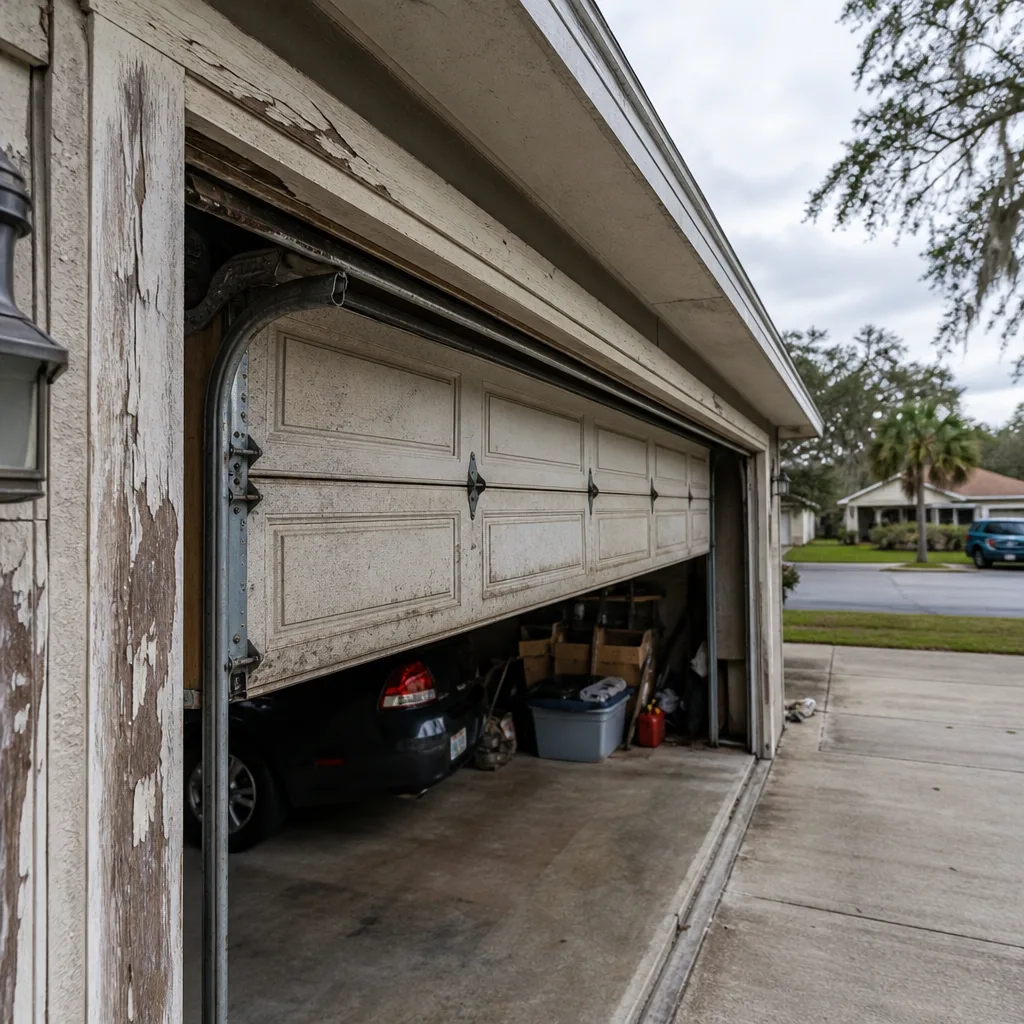 Before
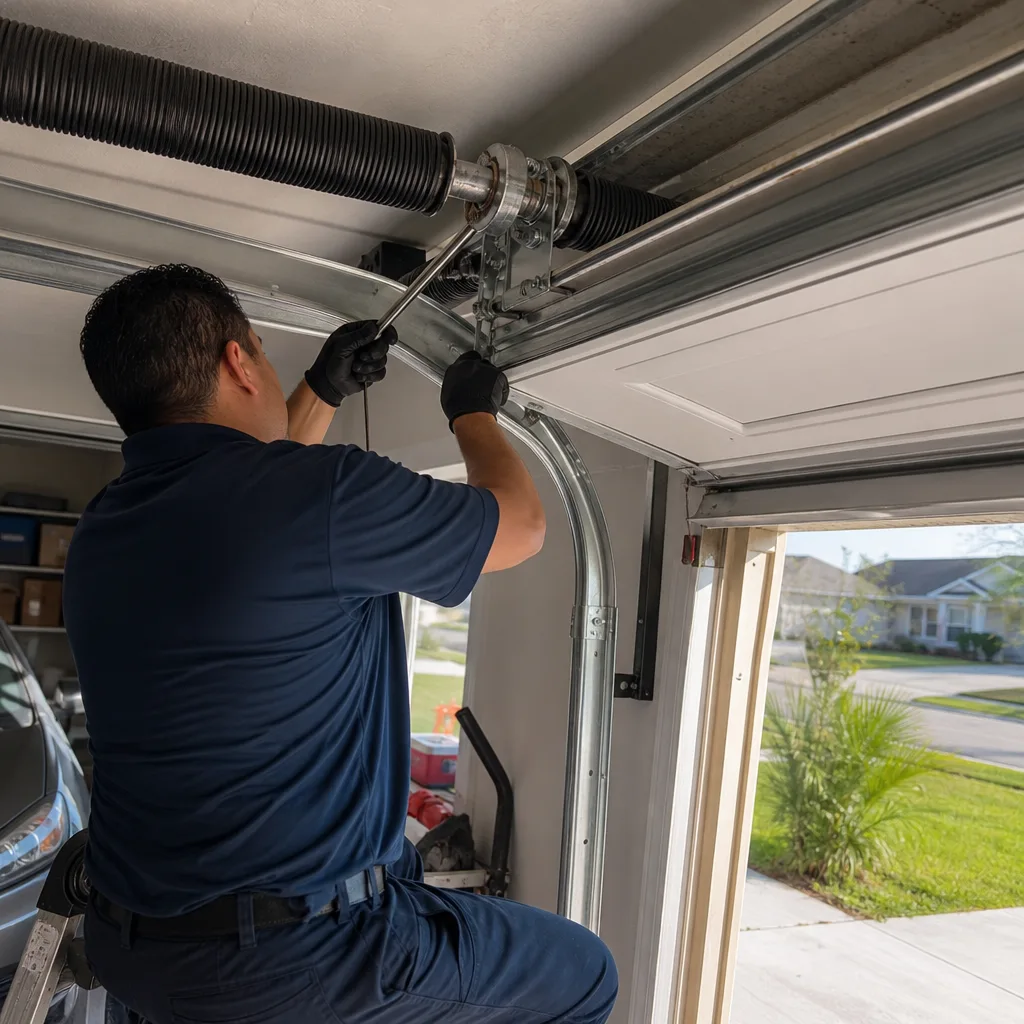 After
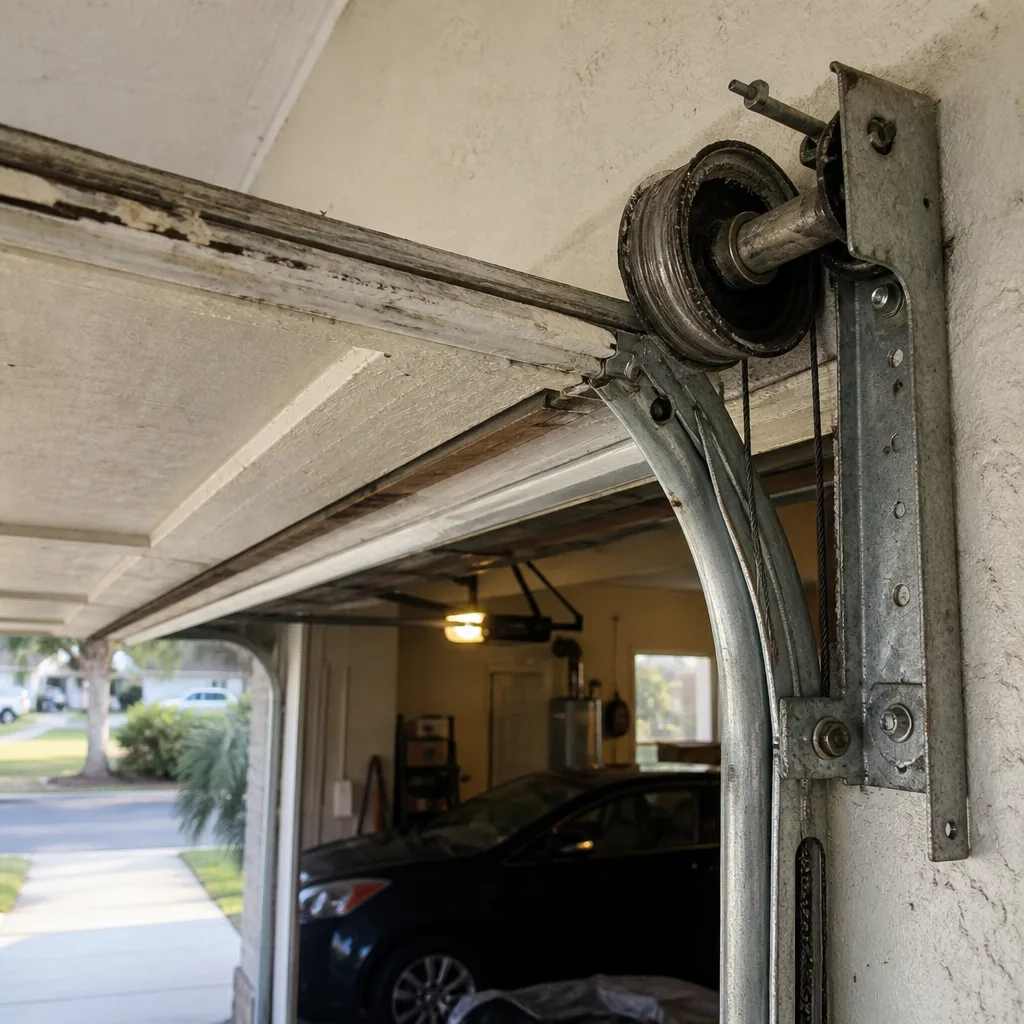 Before
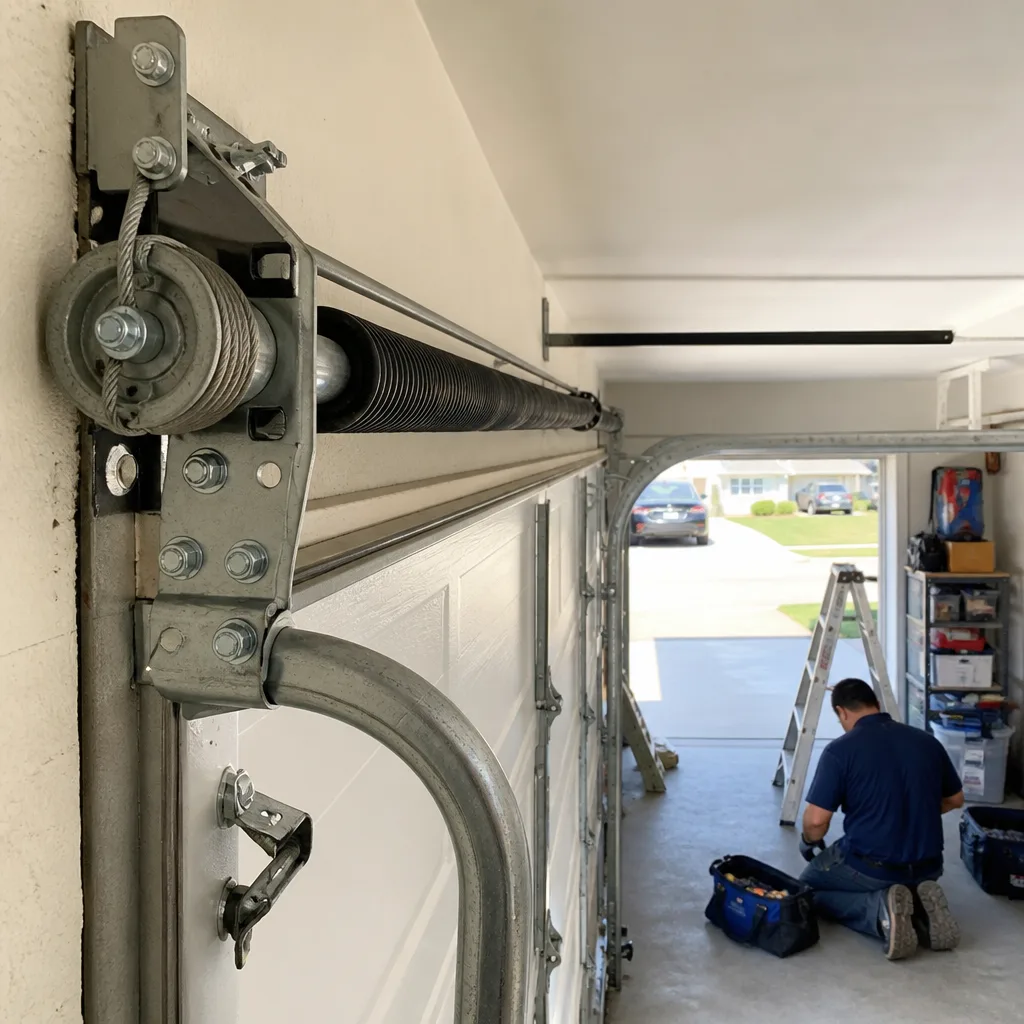 After
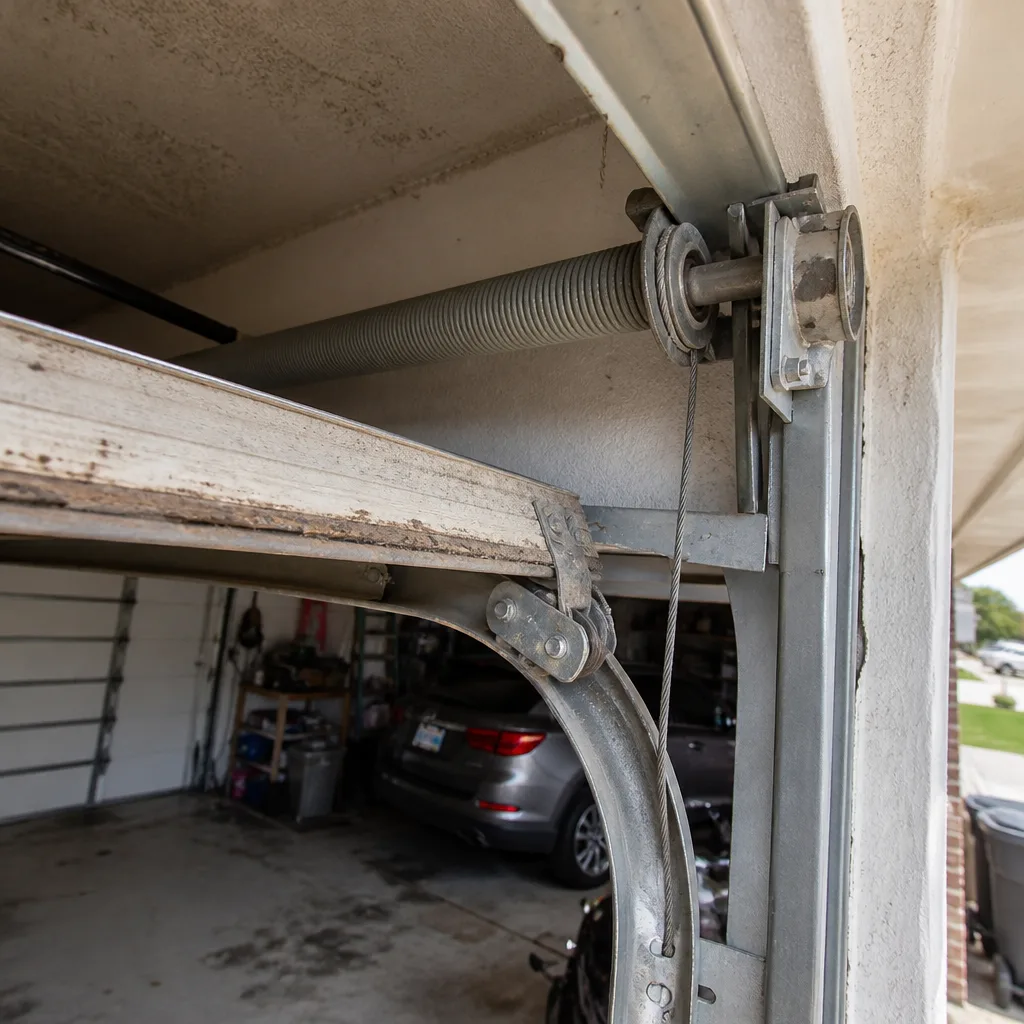 Before
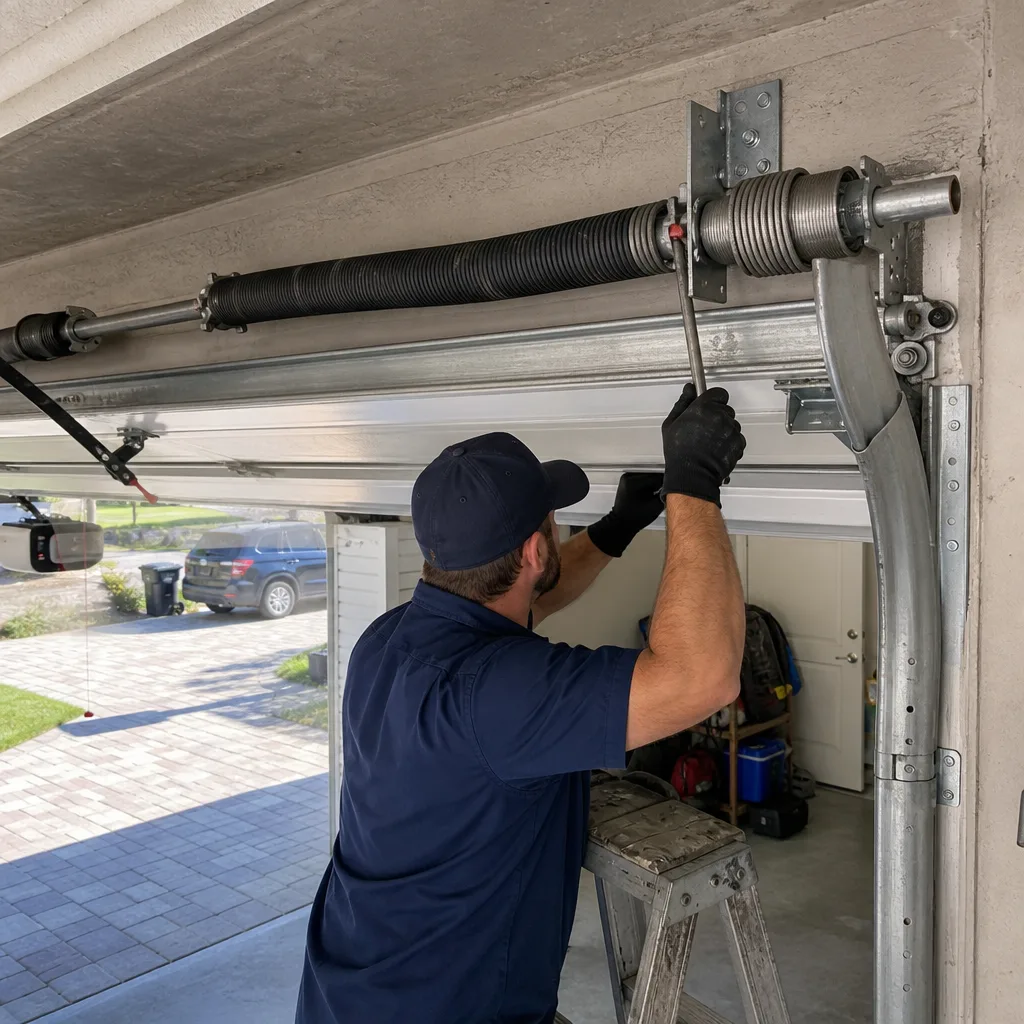 After