
Last updated October 17, 2026
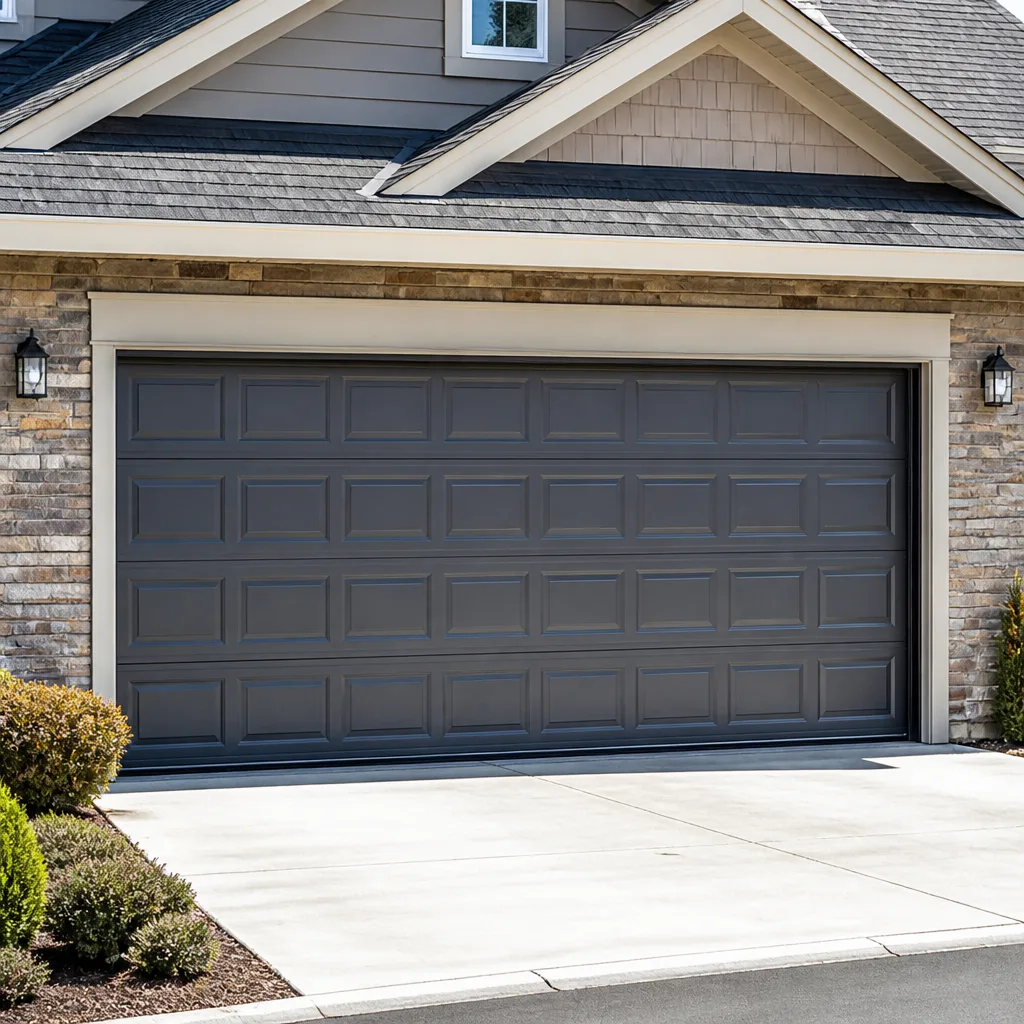 Raised-panel steel
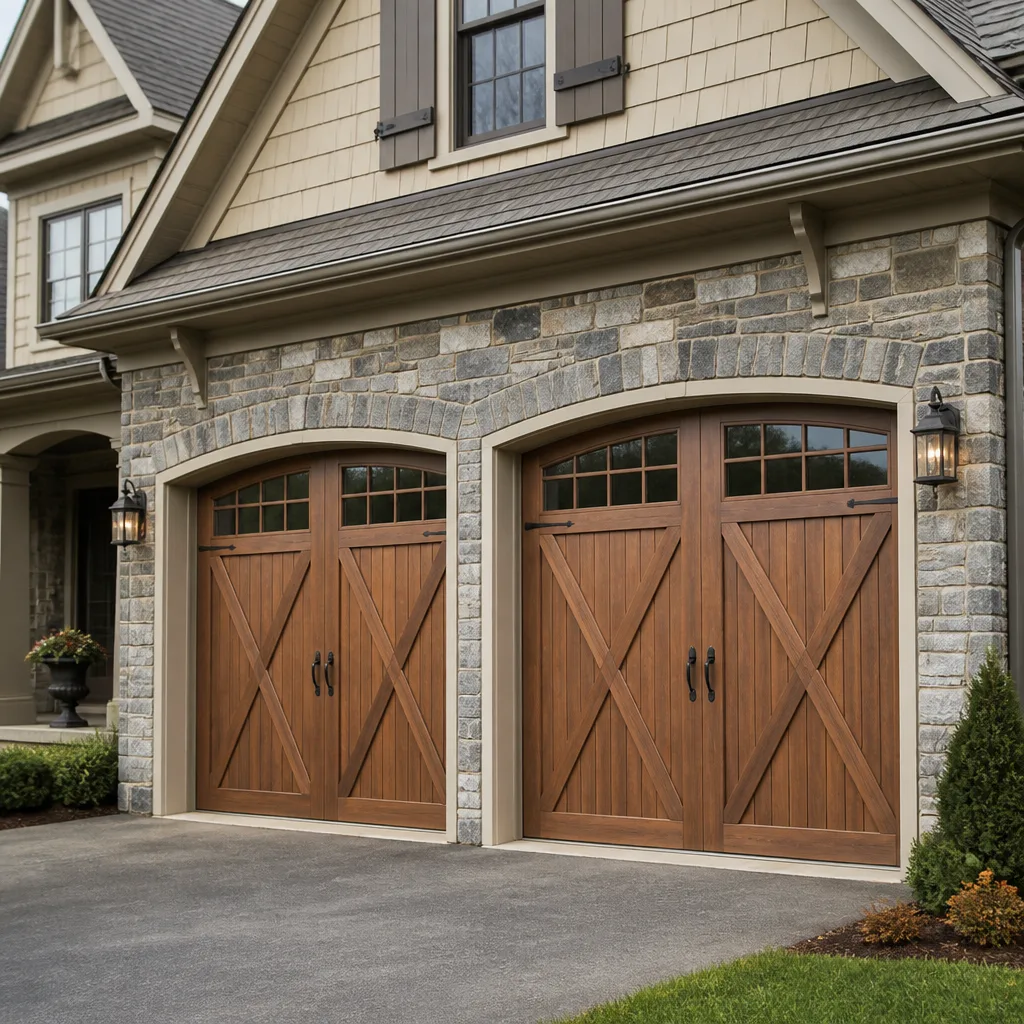 Carriage house
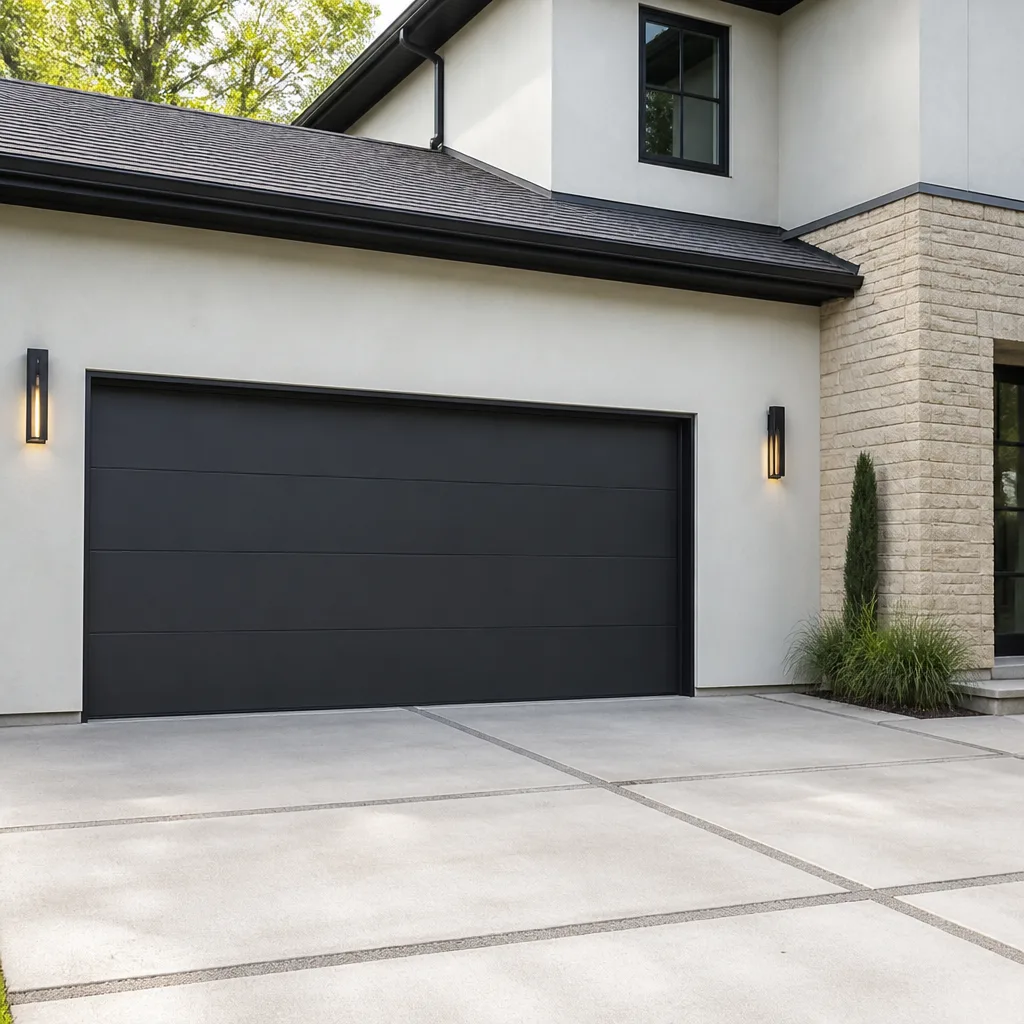 Modern flush
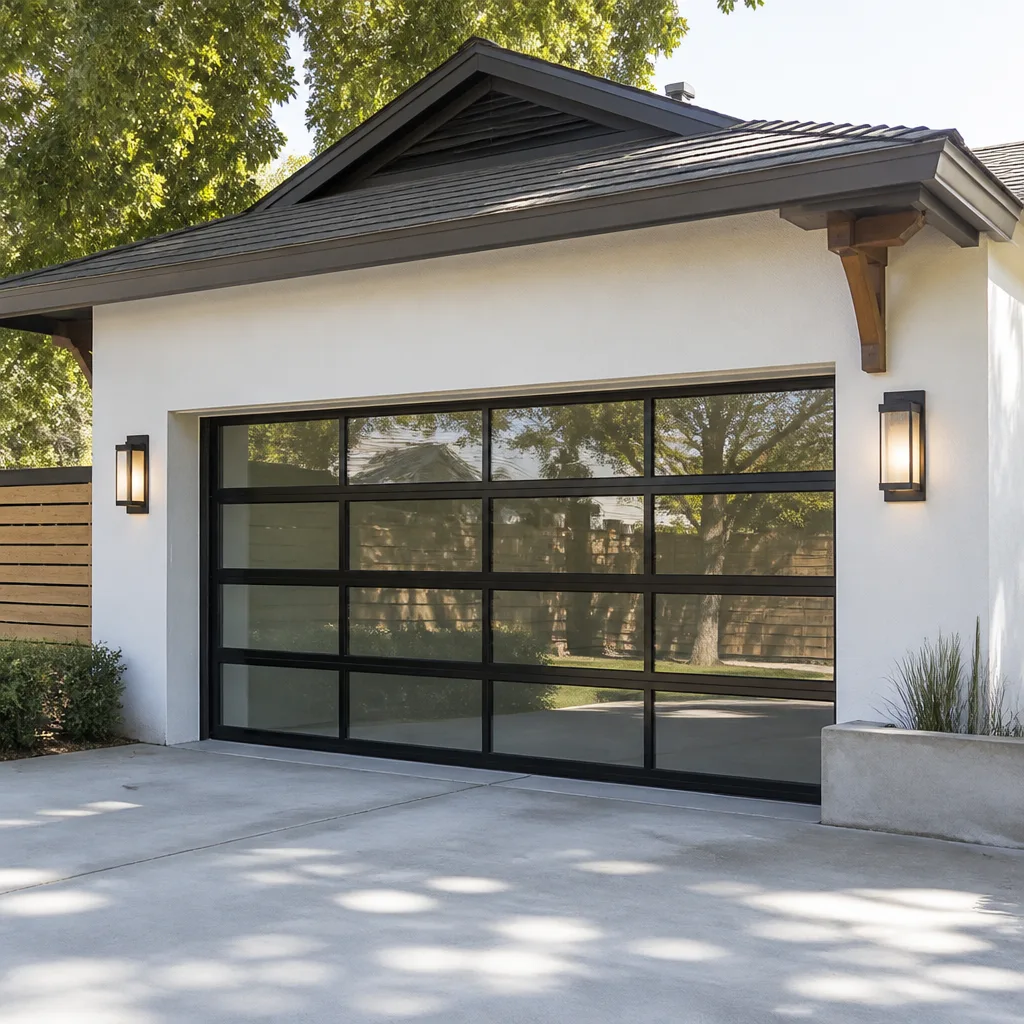 Full-view glass
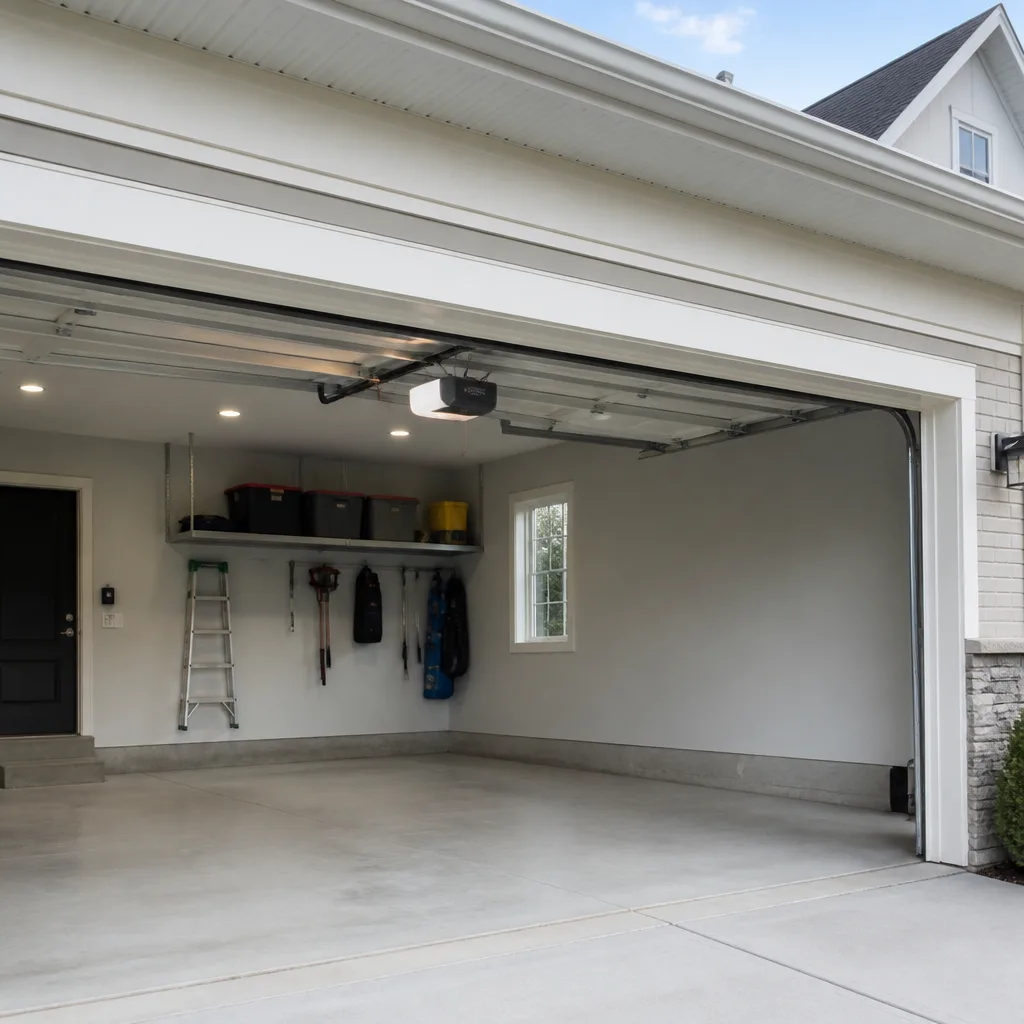 LiftMaster openers
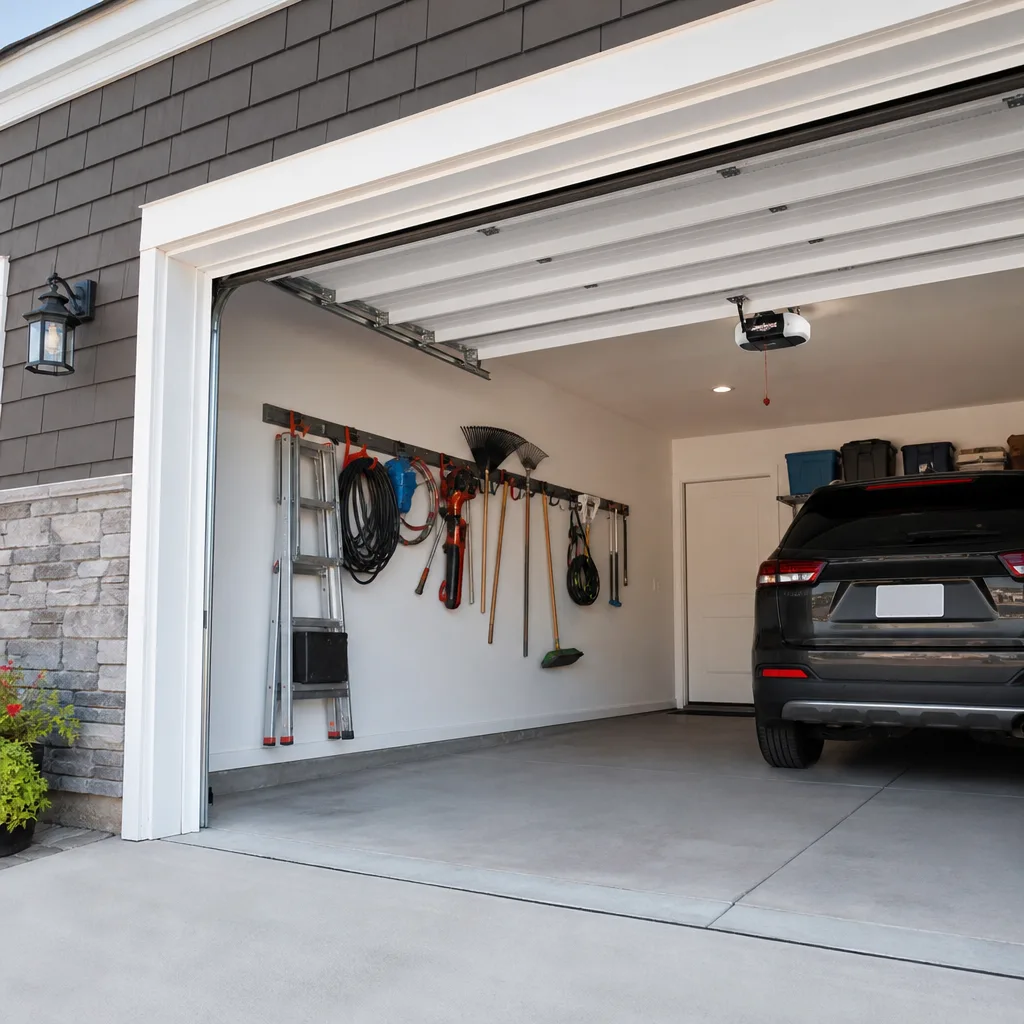 Chamberlain openers
Full 25-point door and opener safety check with every visit - springs, cables, rollers, tracks, and your LiftMaster or Chamberlain opener included
You get a price before we start. It does not change when the truck arrives.
Get your free estimateSeasonal Garage Door Care for Orlando: Year-Round Homeowner’s Guide
The most damaging month for Orlando garage doors isn’t August, when everyone worries about storms. It’s October. That’s the week after homeowners stop worrying, when deferred maintenance from summer humidity collides with cooling temperature swings. Dried-out bottom seals crack. Tension-fatigued springs that held through September heat finally snap on the first 60-degree morning. This guide walks through the four phases that actually define Central Florida’s year: hurricane prep, the humidity peak, the October transition, and the dry winter window. For a deeper dive, see The Complete Guide to Garage Door in Orlando. If you live in Orlando, this is the seasonal rhythm your garage door follows whether you notice it or not.
Quick Answer
Orlando garage doors need attention in four distinct phases, not four traditional seasons. May is hurricane-prep month: check the opener’s manual release, secure locks, and replace a worn bottom seal. July through September is humidity season: lubricate moving parts monthly and watch for rust on hardware. October and November are transition months: recheck spring tension after temperatures swing and replace any seal that dried out over summer. December through February is the dry window: the only reliable time in Orlando for painting, adhesive curing work, and deep maintenance that requires a controlled environment.
Styles & brands we work with
Table of Contents
- Orlando’s Four Seasonal Phases (That Actually Matter)
- May to June: Hurricane Preparation for Your Garage Door
- July to September: Surviving the Humidity Peak
- October to November: The Transition Months Nobody Plans For
- December to February: The Dry Maintenance Window
- Why Afternoon Thunderstorms Are Harder on Orlando Doors Than Anywhere Else
- Common Mistakes to Avoid
- When to Call a Professional
Orlando’s Four Seasonal Phases (That Actually Matter)
Orlando doesn’t have spring, summer, fall, and winter in the way that a homeowner in Ohio or Maine understands them. We have a hurricane-prep window that runs from late April through June, a humidity peak from July through September, a brief October-to-November transition, and a dry reprieve from December through February. Each phase stresses different components of a garage door system in different ways.
In our experience working on garage door repairs across Orlando, we see the same pattern every year. Springs installed or adjusted in February behave differently by June. Seals that looked fine in March are cracked by late October. Homeowners who understand this rhythm spend less on emergency repairs than those who wait for a door to fail.
What Each Phase Does to Your Door
- Hurricane-prep window (May – June): Pressure changes, high winds, and the need for a functional manual release put focus on locks, cables, and the opener’s emergency mechanism.
- Humidity peak (July – September): Constant moisture accelerates rust on springs, hinges, and tracks. Lubricant breaks down faster. Wooden door panels expand and can bind in their tracks.
- Transition months (October – November): Temperature swings between 60°F and 90°F cause metal components to expand and contract repeatedly, which exposes weak springs and dried seals.
- Dry window (December – February): The only period in Orlando with consistently low humidity, making it ideal for painting, resealing, adhesive work, and lubricant application that needs time to set without moisture interference.
We’ve structured this guide around those four phases. Each section below covers what to do, what to watch for, and what you can safely skip.
May to June: Hurricane Preparation for Your Garage Door
Hurricane season officially begins June 1 in Orlando, but the smart prep work happens in May. A garage door is the largest single opening in most Central Florida homes, and during a named storm it becomes the most vulnerable structural point. If wind gets inside the garage, it can lift roof trusses and cause catastrophic damage. The goal in this phase is not cosmetic: it’s structural readiness.
Step-by-Step: Getting a Garage Door Storm-Ready
- Test the manual release: Pull the red emergency cord with the door closed. The door should stay in place when released and be liftable by hand with moderate effort. If it slams down or won’t hold position, cable tension or springs need attention before any storm approaches.
- Inspect the bottom seal: Run your hand along the rubber strip at the base of the door. Cracks, gaps, or brittleness mean water and wind can get underneath. Replace it now, not when a storm is three days out.
- Check all locking mechanisms: If your door has slide bolts on either side, confirm they seat fully. For doors without manual locks, consider adding them. A wind-rated garage door is only as secure as its lock points.
- Clear the tracks: Remove any debris, cobwebs, or small objects that could obstruct roller movement. During high winds you want the door to operate as smoothly as possible if you need to open or close it.
- Lubricate moving metal parts: Use a white lithium grease on hinges, rollers, and springs. This isn’t about performance; it’s about preventing rust from starting during the wet months ahead.
For families considering a new door, spring is when many Orlando homeowners schedule garage door installation in Orlando because wind-rated models with reinforced struts become a priority. We’ve helped homeowners in College Park and Delaney Park upgrade older doors to wind-load-rated models that meet current code for the Orlando area. If your door is more than 15 years old, the hurricane-prep phase is the right time to assess whether it’s worth reinforcing or replacing.
One note on timing: if you discover a broken spring during hurricane prep, don’t wait. A door with a broken spring cannot be safely lifted manually, which means during a power outage you lose access to whatever is stored in the garage, including generators and emergency supplies. Garage door spring repair in Orlando is a same-day job for most homes, and it’s far better scheduled in May than discovered in September.
July to September: Surviving the Humidity Peak
Orlando’s humidity from July through September sits between 70% and 90% on most afternoons. That’s not an inconvenience for garage door hardware; it’s an active corrosive environment. Steel springs, hinges, and tracks oxidize faster here than in nearly any other part of the country. The maintenance burden in these three months is small but consistent.
Monthly Tasks During Humidity Season
- Lubricate springs and hinges every 30 days: High humidity breaks down standard lubricant faster. Use a silicone-based spray on torsion springs and white lithium grease on hinge pins and rollers. Wipe away old lubricant before applying new.
- Watch for rust on the bottom of the door: The bottom panel catches standing water that splashes up during afternoon downpours. Spot-rust should be sanded and primed with a rust-inhibiting primer. Left untreated, rust spreads under the paint and eats the panel from inside.
- Check wooden doors for swelling: If your door is wood and begins binding in the tracks during summer, the cause is almost always absorbed moisture. You may need to sand down the edges of the panels or adjust the track spacing. This is not a permanent fix; it’s moisture management.
- Test the auto-reverse safety sensors: Humidity can cause condensation on the photo-eye lenses at the base of the door opening. Wipe them clean with a dry cloth during every monthly check.
Afternoon thunderstorms are a daily reality in Orlando from July through September. The brief but intense rain doesn’t just wet the outside of the door; it pools at the foundation line and tests the bottom seal repeatedly. We’ll cover that in more detail below, but for now, know that a bottom seal that looked serviceable in May may be cracking by late August.
For families with young children, this is also the season when a garage door opener failure becomes a daily frustration rather than an occasional annoyance. If you’re hearing grinding sounds when the opener runs in August, it’s worth addressing before school starts and the morning routine gets complicated. Not sure whether to tackle it yourself? Read our DIY vs Professional Garage Door: The Orlando Homeowner’s Decision Guide. Technicians trained on LiftMaster, Chamberlain, and Genie systems can diagnose most opener issues quickly, and a tune-up during the summer is less expensive than an emergency replacement when the opener quits on a school morning.
October to November: The Transition Months Nobody Plans For
This is the phase that catches Orlando homeowners off guard. The humidity breaks, the first cool front moves through, and suddenly a garage door that worked fine all summer starts making noises, binding, or failing to open cleanly. The cause is straightforward: thermal contraction.
Metal components expanded during four months of 90-degree daytime temperatures. When the first 60-degree morning arrives, springs, tracks, and cables contract. If any component was already weakened by summer rust or tension fatigue, that contraction is what pushes it over the edge. It’s why we see more spring failures in October than in any other month.
What to Check in October
- Spring tension and balance: Disconnect the opener and lift the door manually. It should move smoothly and hold position about three feet off the ground. If it drifts downward or feels heavy, the springs need adjustment. A spring that was calibrated in February may be slightly under-tension by October because of accumulated metal fatigue.
- Bottom seal condition: Summer heat and ozone degrade rubber seals even when the door isn’t used. Run your hand along the seal and look for hairline cracks. If you can see daylight under the door when it’s closed, the seal is done.
- Roller wear: Nylon rollers wear faster in humid conditions combined with daily use. Listen for grinding or rattling sounds during operation. Worn rollers put extra stress on the opener motor and the hinges.
- Cable condition: Look at the lifting cables on both sides of the door. Frayed strands, rust spots, or slack are warning signs. Cables under tension are dangerous to replace without training, so call a professional if you see damage.
We recommend treating October as a second maintenance checkpoint each year, equal in importance to the May hurricane-prep window. The difference is that May prepares the door for stress, while October catches damage that summer already caused. A homeowner who handles both checkpoints avoids most emergency repairs.
For anyone who delayed spring repair work, October is the last comfortable window before the holidays to schedule it. Waiting until December means competing with holiday schedules and occasionally working in less predictable weather. The door doesn’t care about the calendar, but your repair timeline gets more complicated.
December to February: The Dry Maintenance Window
From December through February, Orlando finally gets a break. Humidity drops into the 40% to 60% range on most days, and rain becomes less frequent. This is the only time of year when certain types of work can be done properly in Central Florida.
Paint needs dry conditions to cure, and not just dry air: the surface of the door needs to be free of condensation during application and the first hours of drying. In Orlando’s summer, that’s nearly impossible. In the winter window, it’s routine. The same logic applies to adhesive work like weatherstripping replacement, panel repair with epoxy, and caulking around the door frame.
Winter Maintenance Tasks That Only Work in the Dry Window
- Paint or refinish the door: If your garage door needs repainting, December through February is the window. Scrape, sand, prime, and paint with an exterior-grade product. Allow a full 48 hours of dry weather before the door is exposed to rain.
- Reseal the bottom of the door: This is an adhesive job. The new rubber seal needs to bond to the aluminum retainer, and that bond forms best in low humidity. Doing this in July means the adhesive may not set before afternoon rain hits.
- Deep-clean the tracks and hardware: Remove built-up lubricant residue and grime from the tracks using a dry cloth and a mild solvent. Follow with fresh lubricant applied sparingly. This is a two-hour job that’s most comfortable in winter temperatures.
- Service the opener gears and drive mechanism: Openers on belt-drive and chain-drive systems benefit from winter service when thermal conditions are stable. This is also the time to replace opener batteries in remotes and keypads.
We also see a pattern of Orlando homeowners using the winter window for new door shopping. The logic is sound: you can see how a door operates in cooler temperatures, compare finishes without summer glare, and schedule installation without competing against hurricane-driven demand. For help budgeting, check our Garage Door Cost Breakdown: The Orlando Homeowner’s Reference for 2026. Brands like Amarr, Wayne Dalton, and Raynor all offer models that handle Orlando’s humidity well, and the dry season gives you time to make a decision without pressure.
Why Afternoon Thunderstorms Are Harder on Orlando Doors Than Anywhere Else
Orlando gets about 80 thunderstorm days per year, concentrated heavily between June and September. Those storms are not gentle rains. They’re short, intense downpours that drop an inch or more of water in under an hour, often driven sideways by wind. That pattern creates a specific problem for garage doors that homeowners in drier climates never face: standing water pressure at the bottom seal line.
When water pools at the base of a garage door during a heavy downpour, it exerts hydrostatic pressure against the bottom seal. If the seal is new and properly seated, it keeps the water out. But if the seal has even small cracks or has compressed over time, water pushes through and wets the garage floor, the bottom panel, and anything stored near the door.
How to Check Your Bottom Seal After a Thunderstorm
After the next heavy afternoon storm in Orlando, go into the garage and run your hand along the inside track where the bottom of the door meets the concrete. If you feel moisture or see a damp line, water is getting through. A proper seal should leave that area completely dry.
One detail that gets overlooked: the seal needs to compress firmly against the concrete. Over time, concrete settles and can create small gaps under the door. In neighborhoods like Baldwin Park and Hunter’s Creek where driveways slope toward the street, water from the driveway often channels back toward the garage door rather than away from it. We check the seal during any garage door repair service in Orlando because it’s the component most often failing without the homeowner noticing.
What a Tight Seal Actually Looks Like
The bottom seal should compress visibly when the door closes. Run your hand along the outside bottom edge after the door is down: you should feel slight resistance, not a gap. If you can slide a pencil under the door anywhere along its width, the seal is no longer doing its job. For Orlando specifically, we recommend replacing the seal slightly more often than the national average. The rubber breaks down faster here due to UV exposure, heat, and the constant moisture cycling from those daily afternoon storms.
Common Mistakes to Avoid
- Lubricating a dirty track: Spraying lubricant onto a track that’s coated in dust and grime creates an abrasive paste that accelerates roller wear. Clean first, then lubricate. This is a five-minute step most people skip.
- Ignoring a noisy door in summer: A door that’s been getting louder through July and August is telling you something. By October, that noise is often a broken spring or a failing opener gear. Summer noise is a maintenance request, not a background sound.
- Painting the door in hummer: Exterior paint applied in Orlando’s summer humidity traps moisture under the finish. The paint looks fine for six months, then starts peeling in sheets. Only paint in the dry window, or wait until December.
- Replacing only one spring: Garage door torsion springs are sold in matched pairs because they wear at approximately the same rate. Replacing only the broken spring means the other one is close behind, and the door will be unbalanced. Replace both, always.
- Using WD-40 on springs: WD-40 is a water displacer, not a lubricant. It works briefly and then evaporates, leaving metal unprotected. Use a silicone-based spring lubricant or white lithium grease instead.
- Skipping the manual release test before hurricane season: The red emergency cord is there for a reason. If you’ve never pulled it, you don’t know whether it works. Pull it once in May and once in October.
When to Call a Professional
Some jobs are homeowner-friendly: cleaning tracks, testing the auto-reverse, checking the manual release, replacing remote batteries. Others carry real risk. Springs under tension can cause serious injury if mishandled. Cables that snap can whip with enough force to cut skin or shatter glass. If your door has a broken spring, frayed cables, a damaged bottom panel, or an opener that’s making grinding sounds, stop troubleshooting and call a professional.
Fernbrook Garage Doors Orlando offers free estimates throughout the Orlando area. Call (850) 754-6073 and a live person will answer, any hour, any day. We’ll give you a written price before any work begins, and every job comes with the 365-Day Done Right Promise. If it’s not done right, we make it right.
See the difference
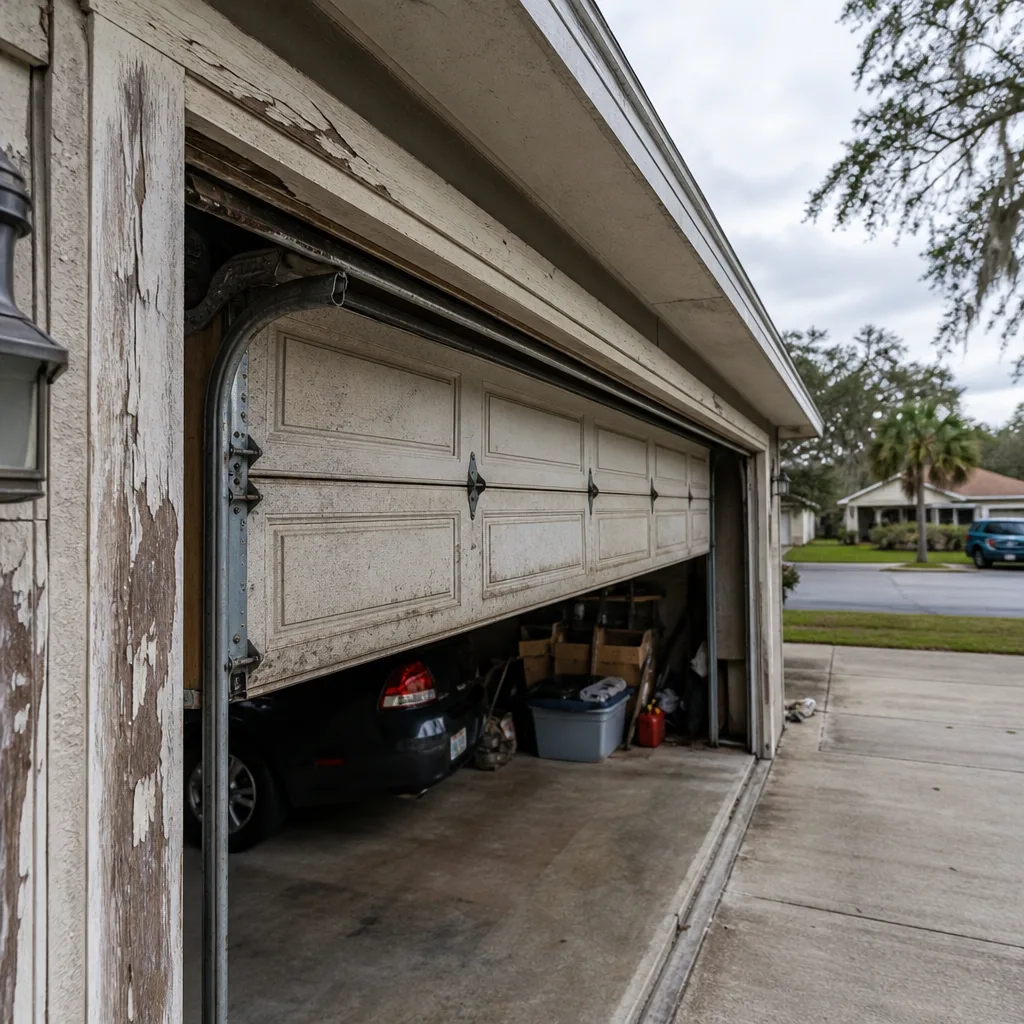 Before
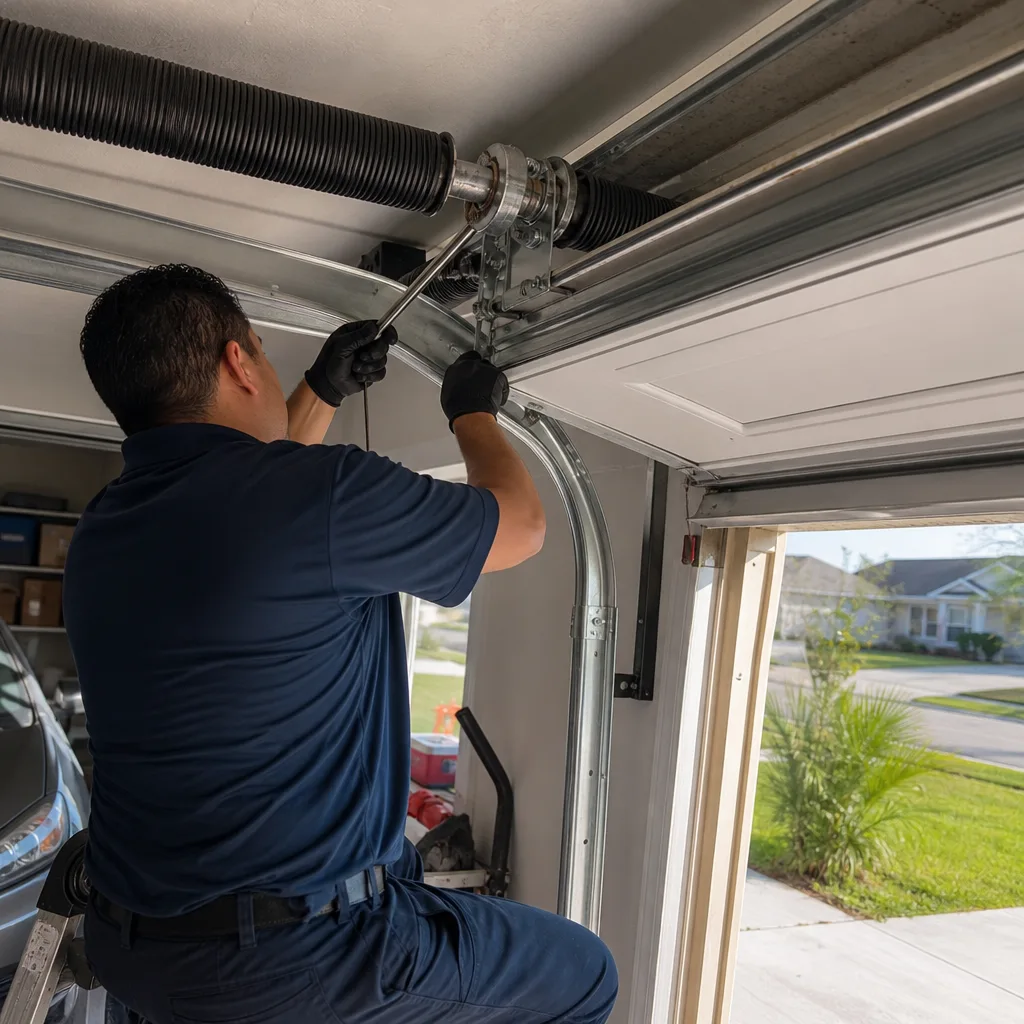 After
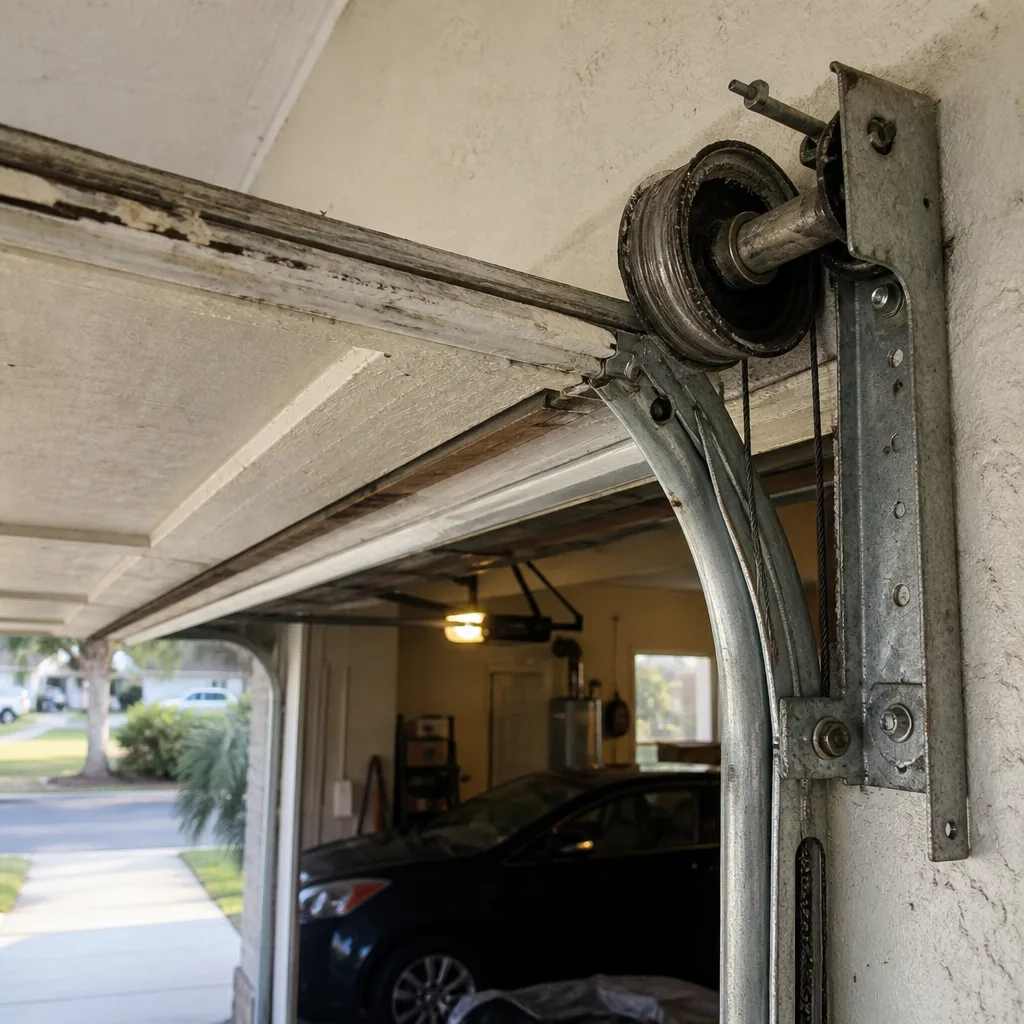 Before
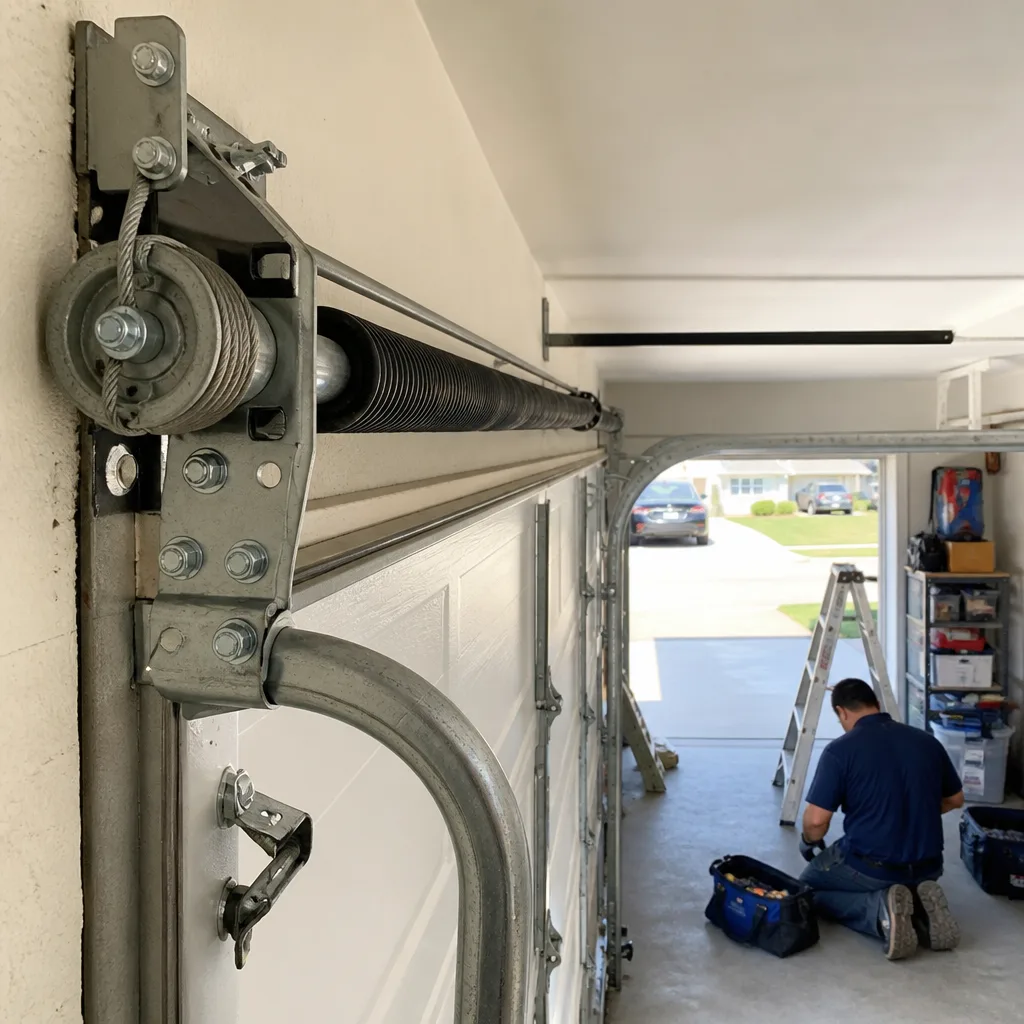 After
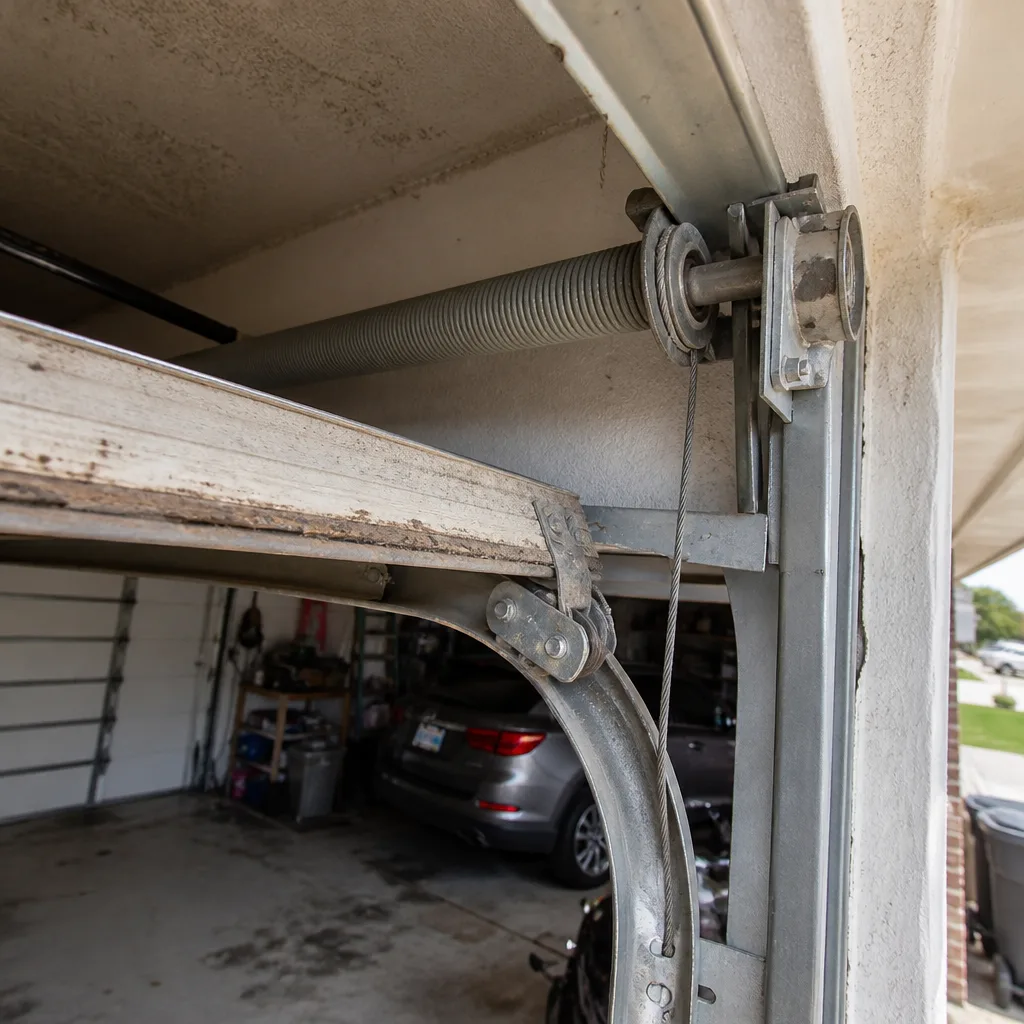 Before
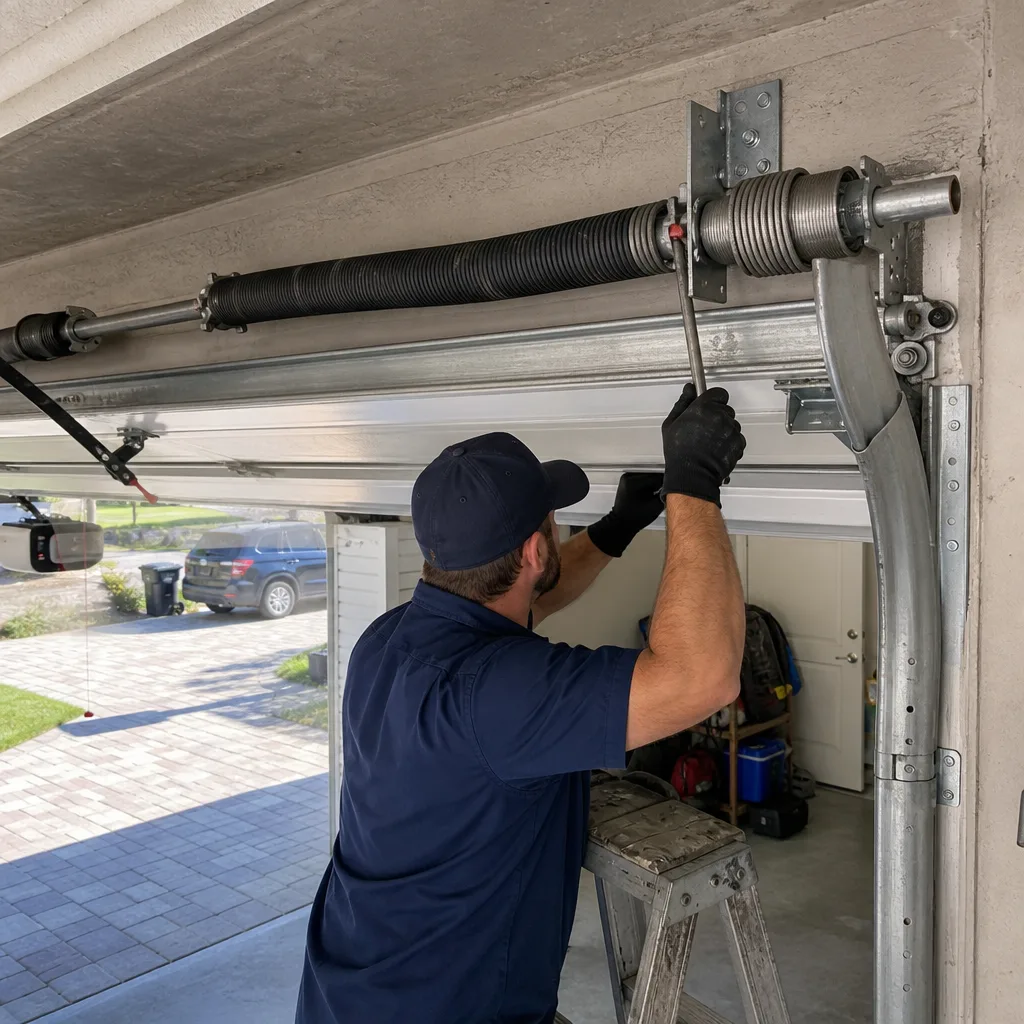 After
Frequently Asked Questions
Monthly during the humid months from May through October, and every other month during the dry winter window. In Orlando’s climate, silicone-based sprays on springs and white lithium grease on hinges and rollers hold up best against constant moisture.
No. Orlando’s summer humidity prevents proper curing and traps moisture under paint, leading to peeling within six to twelve months. December through February is the only reliable window for painting a garage door in Central Florida.
Test the manual release, inspect and replace the bottom seal if cracked, check all locking mechanisms, clear the tracks, and lubricate all moving parts. If you have a broken spring, repair it before storm season so you can lift the door manually during a power outage.
October’s cooler temperatures cause the metal springs, tracks, and cables to contract. If any component was weakened by summer heat and humidity, that contraction is often what triggers the first audible warning sounds. It’s why we see more spring failures in October than any other month in Orlando.
Most garage door spring repairs in the Orlando area fall within a predictable range, though exact pricing depends on spring type, door weight, and model. The best way to get an exact number is to call (850) 754-6073 for a free estimate. Fernbrook provides a written price before any work starts, so there are no surprise invoices.
Yes. Fernbrook technicians arrive with a full range of springs, cables, rollers, seals, and opener components on the truck so most repairs in Orlando are completed the same visit. Call (850) 754-6073 to schedule, and a live person will answer 24 hours a day.
The Bottom Line
Garage door care in Orlando follows a rhythm that has nothing to do with traditional seasons. Prepare in May for hurricane season. Maintain monthly through the summer humidity. Use October as a second checkpoint to catch what summer damaged. Then handle painting, resealing, and deep maintenance in the dry winter window. Miss any one of those phases and the cost shows up later, usually as an emergency repair at the worst possible time. Handle all four and your garage door will last years longer than Orlando’s climate would otherwise allow. For more guides & resources, visit our blog.
If you’d like a professional eye on your door at any point in the year, we’re happy to help. Fernbrook Garage Doors Orlando home is one call away at (850) 754-6073. Estimates are free, and the price you’re quoted is the price you’ll pay.
Written by Jesse Calder, Owner at Fernbrook Garage Doors Orlando, serving Orlando since 2002.