
Last updated October 17, 2026
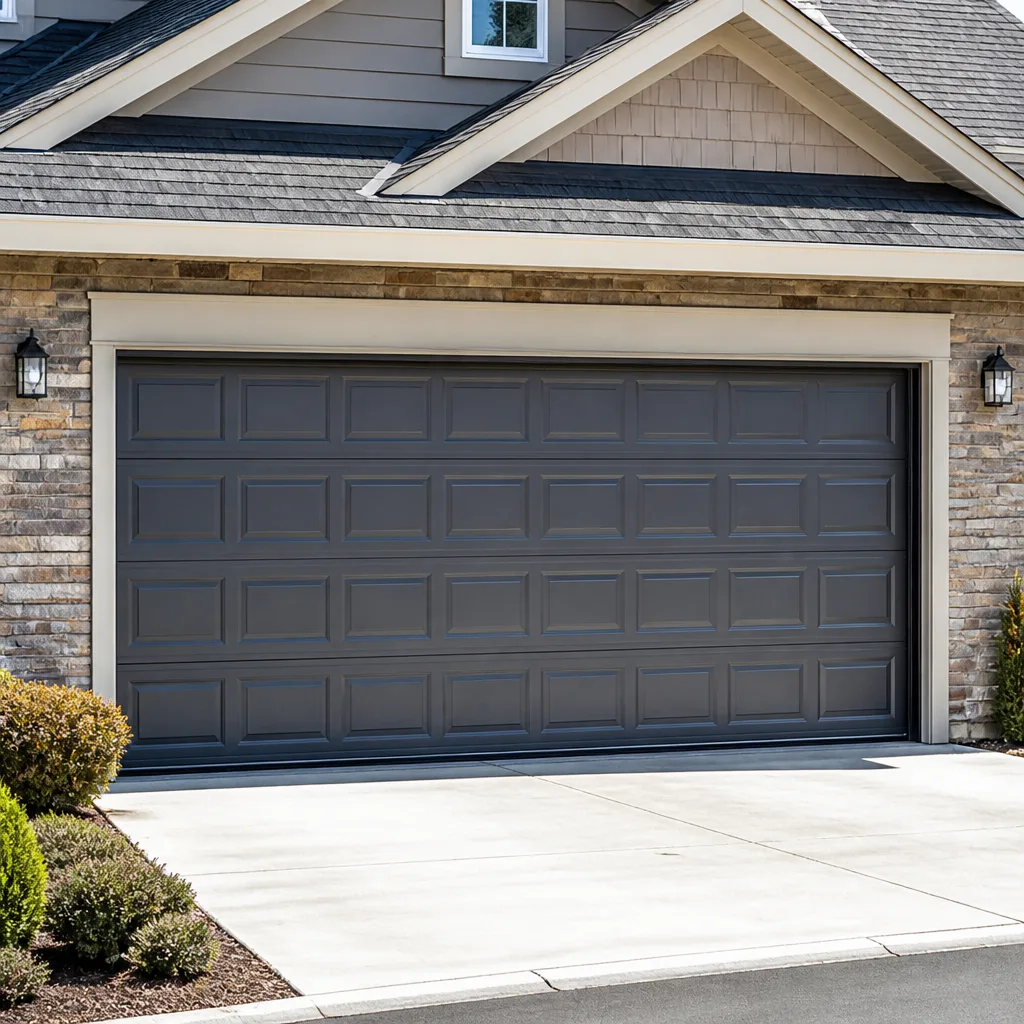 Raised-panel steel
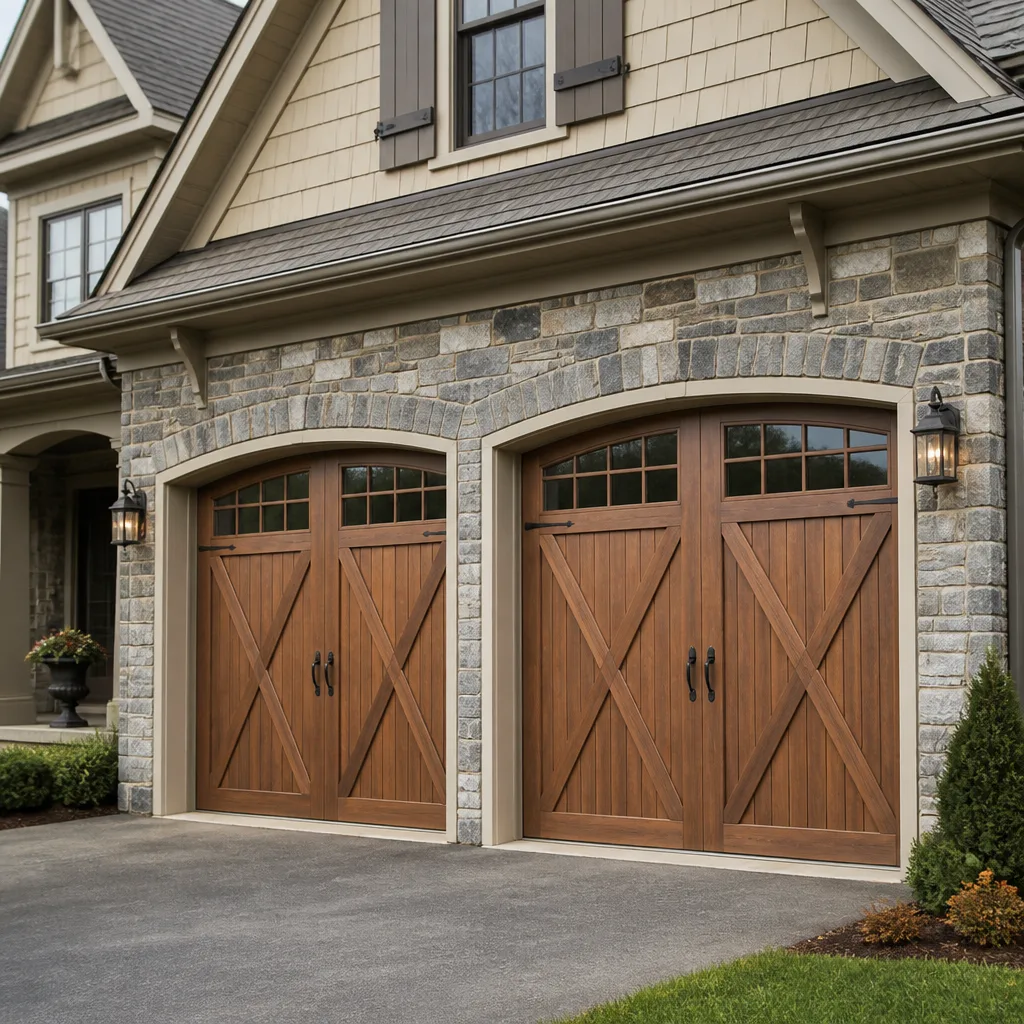 Carriage house
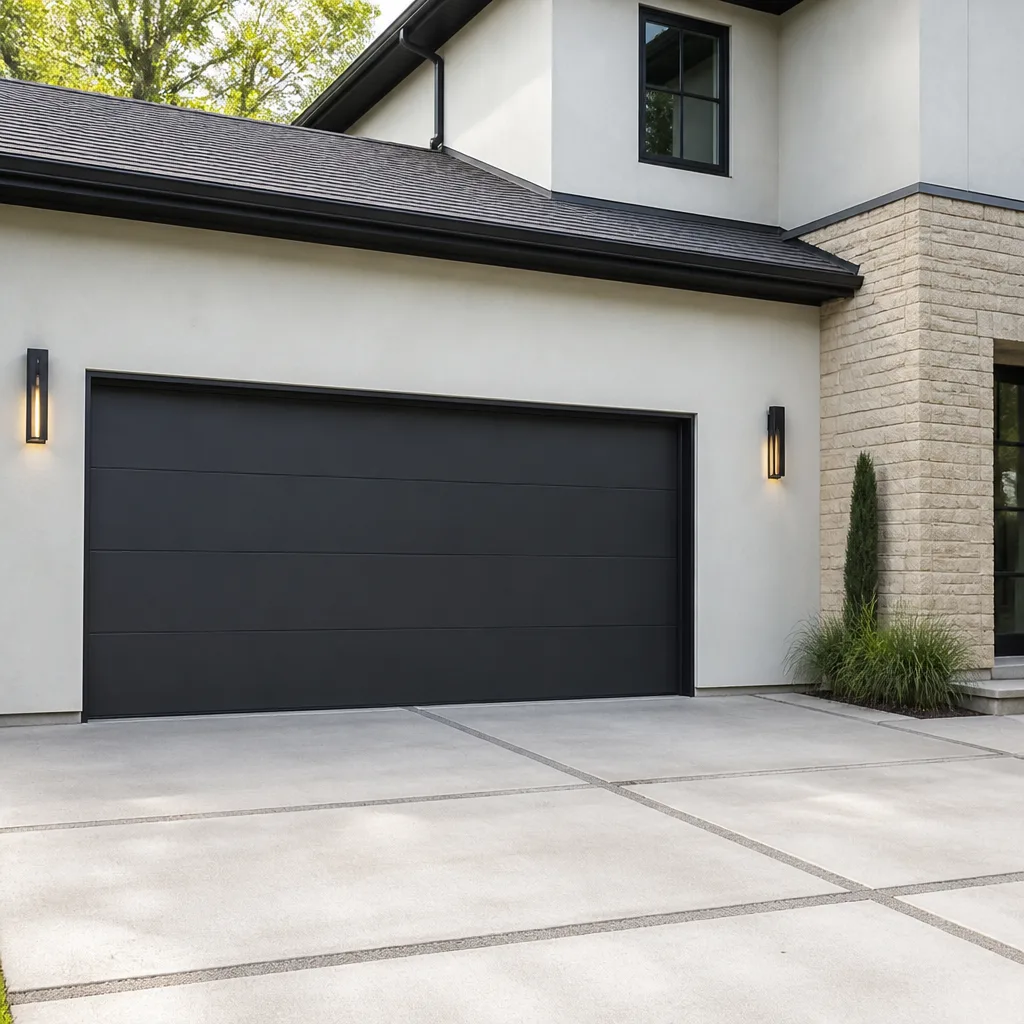 Modern flush
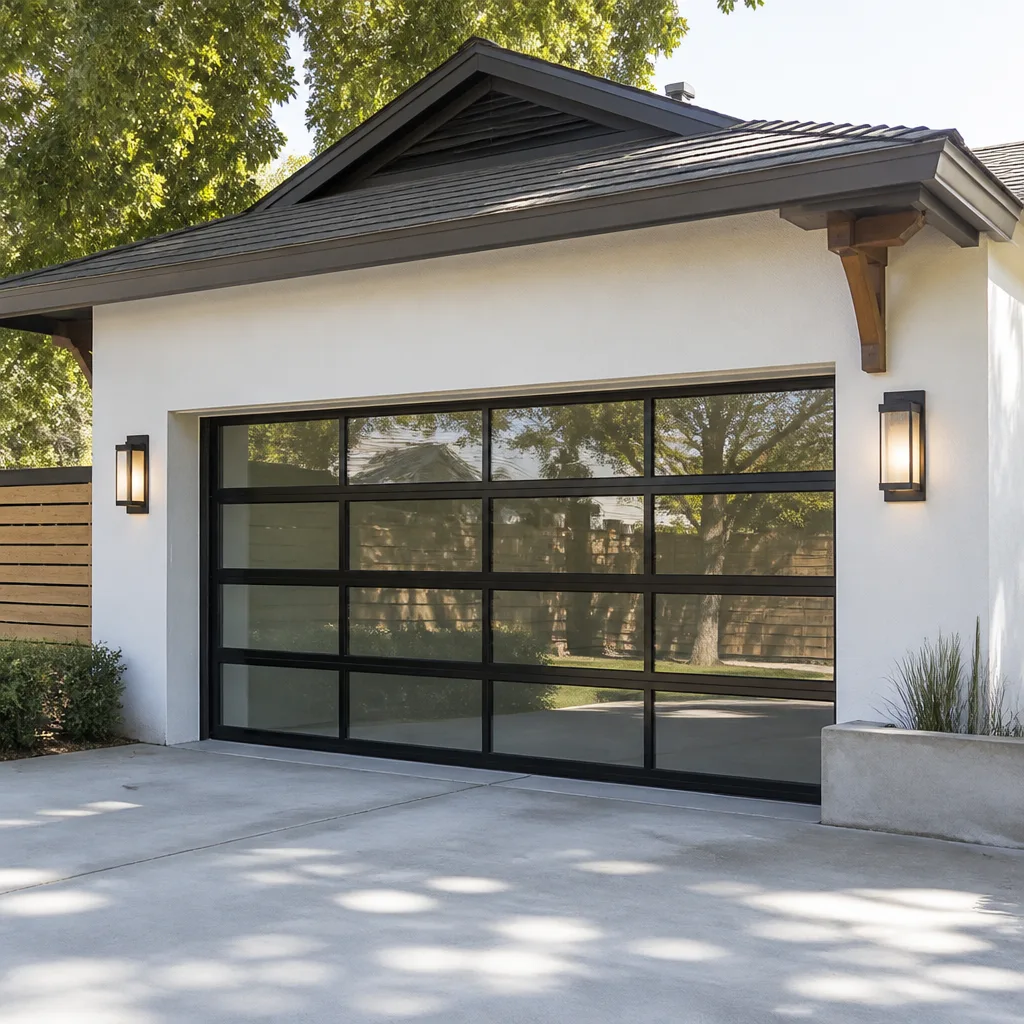 Full-view glass
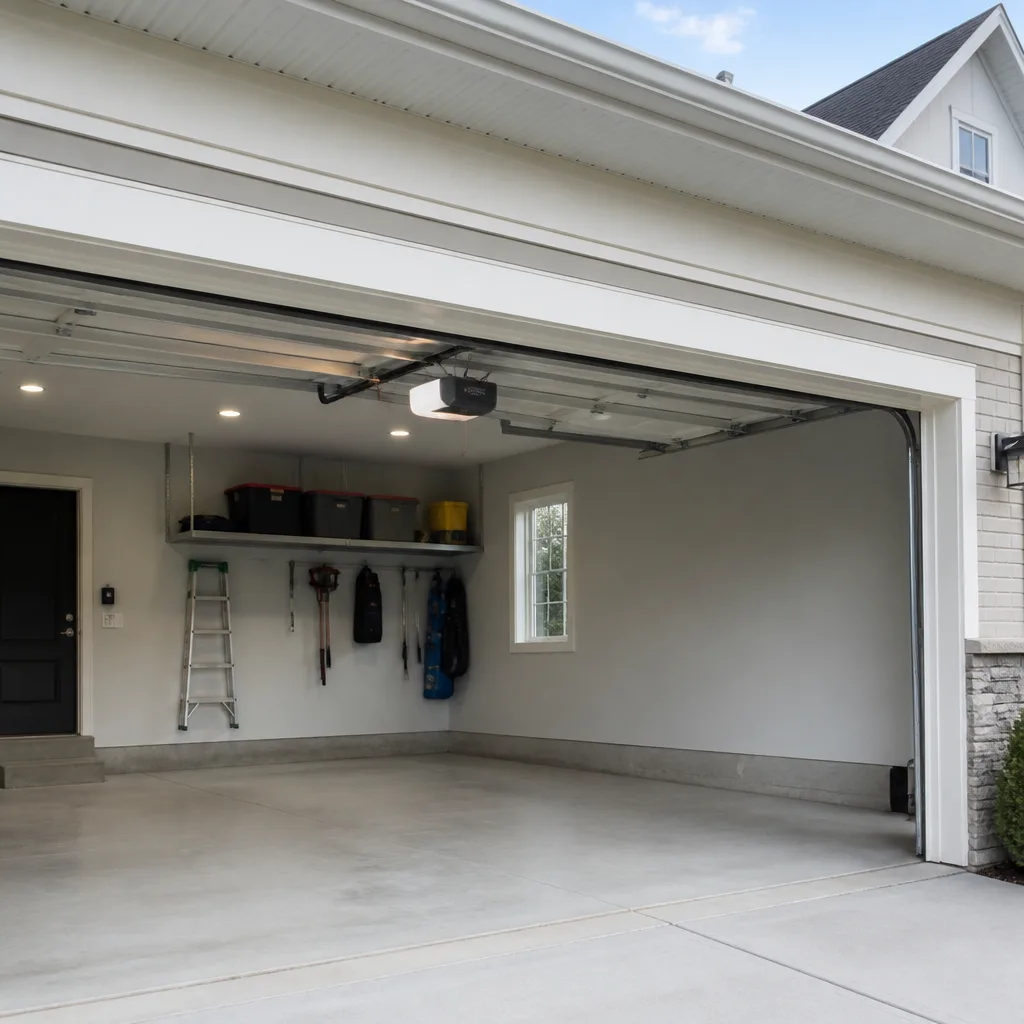 LiftMaster openers
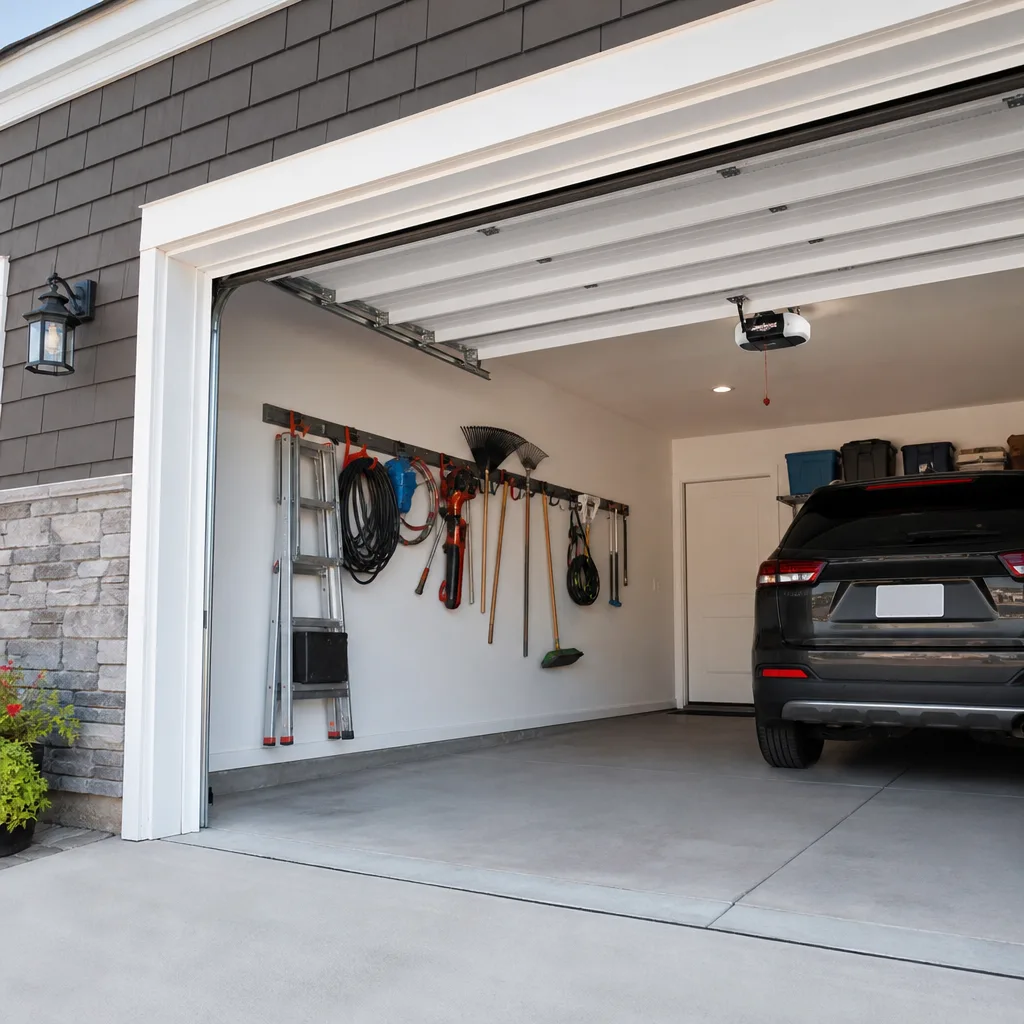 Chamberlain openers
Full 25-point door and opener safety check with every visit - springs, cables, rollers, tracks, and your LiftMaster or Chamberlain opener included
You get a price before we start. It does not change when the truck arrives.
Get your free estimateThe Complete Guide to Garage Door in Orlando
Most Orlando homeowners replace their garage door once every 8 to 12 years. But a large share of those replacements happen 3 to 5 years earlier than the door itself actually requires, because no one explained how Central Florida’s 90% summer humidity quietly degrades springs, cables, and wood panels from the inside out. This guide walks through what actually shortens a garage door’s life in Orlando, what the Florida Building Code requires by zip code, and the correct order of decisions so you buy the right door once, not twice. You’ll also learn what a finished installation should look like, room by room, before you sign off on the job.
Quick Answer
A garage door in Orlando is a climate-exposed system, not just a mechanical panel. The right door for this area depends on wind load rating for your specific zip code, a material that tolerates 70% to 90% humidity without warping or corroding, and an opener with enough torque for the door’s weight and balance, not just horsepower on a box. See our Garage Door Cost Breakdown: The Orlando Homeowner’s Reference for 2026 for detailed figures, and expect to pay $1,200 to $4,800 for a full door replacement in Orlando, $180 to $340 for spring repair, and $150 to $400 for opener repair, with exact pricing confirmed in writing before work starts.
Styles & brands we work with
Table of Contents
- Why Orlando’s Climate Changes How You Should Think About Garage Doors
- Door Materials That Hold Up in Orlando (and Ones That Don’t)
- Florida Building Code and Wind Load Ratings: What Your Zip Code Requires
- The Correct Order of Decisions: Material, Insulation, Opener, Springs
- What a Finished Installation Should Look Like, Room by Room
- What Garage Door Work Costs in Orlando
- Maintenance That Actually Extends Door Life in This Climate
- Common Mistakes to Avoid
- When to Call a Professional
- Frequently Asked Questions
Why Orlando’s Climate Changes How You Should Think About Garage Doors
Orlando’s combination of heat, humidity, and UV exposure works on a garage door in ways that a showroom in Ohio or a warehouse in Texas never has to account for. The garage door is part of the home’s envelope, and in Central Florida it takes the brunt of the afternoon sun on the west-facing side of the house, while the inside face sits in air that often holds 70% to 90% relative humidity for months at a time.
That humidity does something specific to metal components. Torsion springs, which carry the entire weight of the door every time it opens, are made of oil-tempered steel wire. In a dry climate, a spring’s surface rust is cosmetic. In Orlando, moisture in the air combines with the slight salt content that drifts inland from the Atlantic and Gulf coasts, and it accelerates corrosion on the spring coil surface. Once pitting starts, stress concentrates at those pits, and the spring fails earlier than its rated cycle life. The same applies to cables wrapped around the drums at each end of the spring shaft.
UV exposure is the second factor most national guides miss. Orlando averages around 235 sunny days per year, and a garage door facing south or west in neighborhoods like Dr. Phillips, College Park, or Baldwin Park can see surface temperatures well above 140°F in July. That heat breaks down paint finishes, warps wood panel cores that were never sealed properly, and causes vinyl bottom seals to harden and crack at the corners where they flex most. We’ve replaced bottom seals on doors in Thornton Park that were only three years old, because the afternoon sun had turned the rubber brittle and the seal no longer kept rainwater out during afternoon thunderstorms.
Understanding this context changes the buying conversation. A door that performs beautifully in a dry, mild climate can fail in four years here if the gauge is too thin, the finish is single-coat, or the spring is sized without accounting for the humity-driven extra drag on panels that have absorbed moisture.
Door Materials That Hold Up in Orlando (and Ones That Don’t)
The three materials worth considering for an Orlando garage door are steel, composite, and aluminum, but they are not interchangeable. Each has a specific failure mode in this climate, and knowing that failure mode before you buy is the difference between a 20-year door and a 5-year disappointment.
Steel (24-gauge or 26-gauge): 24-gauge steel is the thicker option and the better choice for Orlando. It resists dents from the daily use of a family home, and when it has a galvanized base coat plus a baked-on polyester finish, it holds up against humidity. The risk with steel is not the panel itself, it’s the interior of the panel where insulation is exposed. If the door is not properly sealed at the edges, moisture works into the insulation cavity and rusts the steel from the inside. That’s a failure you won’t see until the panel starts to blister from behind.
Composite: Composite doors, made from wood fibers bonded with resin, are the quietest option and give a wood look without the maintenance. They handle humidity far better than solid wood because the resin binder stops the fibers from absorbing water. We’ve seen composite doors on lakefront homes in Winter Park and Conway hold their finish and alignment for over a decade. The tradeoff is weight; composite is heavy, and that means the springs and opener both need to be speced correctly from day one.
Aluminum: Aluminum full-view doors are popular in Orlando’s modern communities like Lake Nona and Baldwin Park because they let in light and look clean. The aluminum frame itself won’t rust, which is the point. However, aluminum dents more easily than steel, and the glass panels turn the garage into a greenhouse in summer unless you choose insulated glass. Aluminum is a good choice for a garage used as a showroom or workshop, and a poor choice for a garage that stores bikes, strollers, and the kids’ sports equipment where dings are daily.
What gets sold here that shouldn’t be: Solid wood doors still show up in Orlando catalogs and on Pinterest boards. They warp in this humidity. The panels swell, the door binds in the tracks, and the finish peels within two or three years unless the homeowner is willing to sand and reseal every year. A wood-look steel or composite door gives the same aesthetic for a small fraction of the maintenance.
Florida Building Code and Wind Load Ratings: What Your Zip Code Requires
Every garage door installed in Orlando must meet Florida Building Code wind load requirements, and those requirements vary by zip code and by whether the door is on a home’s windward or leeward wall. The code is not a suggestion from an HOA committee; it is the legal minimum, and a door that does not meet it can fail during a named storm and expose the entire house to wind-driven rain and structural pressure.
Wind load is measured in pounds per square foot (psf) and depends on your zip code’s design wind speed, the elevation of your home, and the surrounding terrain. In Orlando zip codes like 32801, 32803, 32806, and 32819, design wind speeds typically range from 130 to 150 mph depending on the exact parcel. A door rated for Miami-Dade is not automatically required in Orlando, but a door with a lower rating than your zip code demands is not legal to install. Most municipal permitting offices in Orange County review the door’s wind load documentation as part of the permit application; see Garage Door Permits, Codes & Inspections in FL: What You Need to Know for full details.
What surprises many Orlando homeowners is that their HOA rules can exceed code. In neighborhoods like Celebration or Lake Nona, an HOA may require a specific wind load rating above the code minimum, or it may restrict door materials, colors, and even window pattern layouts. Before you order a new door, check your HOA’s architectural guidelines. The code establishes the floor, the HOA can set the ceiling, and neither one will care how much you like the door after it’s installed.
Two things to ask your installer directly: first, “What wind load rating does my zip code require, and what is the rating on the door you’re quoting?” Second, “Will you pull the permit, and is the permit fee included in the price?” If the answer is vague on either question, the quote is incomplete. A proper wind-rated door in Orlando comes with a manufacturer’s product approval number that the installer files with the permit. That number is the proof the door was tested to the code, not just labeled as such.
The Correct Order of Decisions: Material, Insulation, Opener, Springs
Most homeowners are handed this sequence in reverse. They walk into a home center, pick a door they like the look of, then get told what opener to buy, then discover the springs need to be “upgraded,” and by the time the installation quote comes back nothing matches. The correct order is:
- Choose the material first. Steel, composite, or aluminum, based on how you use the garage and what the door faces. This decision sets the door’s weight and its maintenance profile for the next 15 to 20 years.
- Choose the insulation R-value second. In Orlando, an insulated door helps keep the garage from turning into an oven, which matters if the garage is attached to the house. An R-value between 12 and 18 is appropriate for most Orlando homes. The insulation is bonded inside the panel, and it should be closed-cell so it does not absorb humidity.
- Choose the opener based on the door’s total weight and balance, not just horsepower. A heavier composite or double-layer steel door may need a higher-torque opener with a DC motor, even if the box says 1/2 HP. The opener should also have a belt drive if the garage is below a bedroom, because a chain drive rattles through the ceiling at 6 a.m. before school. Trained technicians work with doors from LiftMaster, Chamberlain, and Genie, among others, and the right choice depends on the specific door weight, not the marketing on the box.
- Choose the spring cycle rating last, and base it on how many times the door opens daily. A standard 10,000-cycle spring lasts about 7 years in a family home where the door cycles 4 to 6 times a day. A 20,000-cycle spring is rated for double the lifespan and costs modestly more. Given Orlando’s humidity, the higher cycle rating matters less than the spring’s factory rust protection, which is the actual coin flip on longevity here.
When you make the decisions in this order, every downstream part matches the one before it. The opener’s torque matches the door’s weight. The spring’s wire gauge matches the panel mass. Nothing gets overworked, and nothing gets overbought. For a more detailed look at full door replacements, including measuring and scheduling, see our Garage Door Installation in Orlando page.
What a Finished Installation Should Look Like, Room by Room
A garage door installation is not done when the door opens and closes. It is done when the opening is sealed, the hardware is square, and the wall finish inside the garage is intact. Walk through these checks before you accept the job.
Inside the garage, at the door frame: The vertical tracks should be plumb and spaced evenly from the door edges on both sides. The gap between the door edge and the track should be consistent from top to bottom. If one side is tighter than the other, the door will pull off balance over time. The bottom corners of the door should press firmly against the floor when closed, and the rubber bottom seal should contact the concrete across its full width with no visible daylight.
At the header: The torsion spring assembly above the door should be centered, with both spring coils evenly spaced and no visible rust at the ends where the set screws grip the shaft. The cables should wind cleanly onto the drums on both sides, with no overlapping wraps or frayed strands.
On the interior wall surface: The finish around the opening should be undamaged. If the installer had to remove old trim or brackets, the drywall or masonry behind should be patched, not left with holes where the old hardware hung. This is one of the most overlooked details in Orlando installs, because so many garages here are finished with drywall and painted, and a slapdash removal leaves holes behind the new tracks.
At the exterior perimeter: The weatherstripping along the sides and top should be continuous, secured flat against the door face, and free of gaps at the corners. A 1/8-inch gap along the top seal lets in enough wind-driven rain during an Orlando afternoon storm to soak the inside of a wood or uninsulated door.
Under the opener: The opener rail should be level, and the safety sensors near the floor should be aligned so the door reverses when the beam is interrupted. Test this with a roll of paper towels or a shoe box. If the door does not reverse, the installation is not complete, period.
What Garage Door Work Costs in Orlando
Prices in Orlando run close to national averages on parts, but labor and urgency vary by neighborhood and season. During hurricane season, from June through November, demand for wind-rated doors and storm reinforcement spikes, and lead times on custom doors stretch by two to four weeks. Spring and fall are the most predictable seasons for scheduling a non-emergency replacement.
Here is what common jobs cost in the Orlando market, based on the work we quote and complete across Orange County:
| Job | Typical Orlando Price Range | Notes |
|---|---|---|
| Single torsion spring replacement | $180 to $340 | Includes labor; exact spring cycle rating matters |
| Double spring replacement | $280 to $500 | Both springs always replaced together |
| Cable replacement (pair) | $160 to $280 | Often needed when a spring has snapped |
| Opener repair (logic board, gears, sensors) | $150 to $400 | New opener runs $450 to $850 installed |
| Full door replacement, single car | $1,200 to $2,800 | Steel, non-insulated to insulated |
| Full door replacement, double car | $1,800 to $4,800 | Depends on material, insulation, windows |
| Bottom seal replacement | $90 to $180 | Humidity cracks these faster in Orlando |
Every Fernbrook job includes a written price before any work begins. That means the quote is on paper, with the line items separated, and the number does not change once the technician opens the panel. If the scope shifts, the new price is written down and agreed to before the added work starts. For a focused breakdown of repair pricing, see our Garage Door Repair in Orlando page.
Maintenance That Actually Extends Door Life in This Climate
Most garage door maintenance advice is written for a national audience and assumes the door lives in a dry garage. Orlando needs a different checklist, because the failure modes here are rust, hardened rubber, and sun-baked finishes, not ice and road salt.
- Lubricate the springs and hinges every 6 months with a silicone-based lubricant. Use a product that is safe for pets, since one overspray lands on the garage floor where the dog walks. Spray the torsion spring coils, the hinge pins, and the roller stems. Do not lubricate the track itself; the rollers are meant to glide on clean metal, and oil in the track collects dust into a paste.
- Inspect the bottom seal every spring, before rainy season starts. In Orlando, the seal bakes and cracks from UV even when the door never moves. Look at the corners first. A seal that has hardened to the consistency of a pencil eraser is due for replacement.
- Wash the door exterior every 3 to 4 months with a mild car wash soap and a soft brush. This removes the mildew and tree pollen film that holds moisture against the paint. In neighborhoods with heavy oak canopy like Winter Park or Maitland, pollen wedges into the panel seams and accelerates the breakdown of the finish.
- Test the auto-reverse once a month. Place a cardboard box flat in the door’s path and close the door. It should reverse within two seconds of contact. This is a safety feature, and it is also the simplest way to catch a sensor misalignment before it becomes a door that crushes a scooter.
- Listen for changes. A garage door in good balance runs with a steady, low hum. A creak that repeats at the same point in the travel, or a clunk when the door changes direction, is a bearing or a roller telling you it is about to fail. In Orlando’s humidity, that sound often appears when a roller bearing starts to corrode internally.
Common Mistakes to Avoid
- Choosing a door without checking the wind load rating for your zip code. A door that is under-rated for your address is not a future problem, it is a code violation the day it is installed, and it can compromise the house envelope during a hurricane.
- Buying a steel door because it was cheap, not because it was the right gauge. Thin 27-gauge or 28-gauge steel doors dent from a bicycle pedal or the trash can, and in Orlando they also rust faster at every scratch because the humid air finds the bare metal immediately.
- Replacing one spring when both are the same age. When one torsion spring snaps, the other has cycled the same number of times and is at the end of its life. Replacing only the broken one means paying for a second service call within months, not years.
- Skipping the permit on a full door replacement. Unpermitted door work in Orange County can surface at resale, and a door that does not meet current code can get flagged by an inspector and cost more to correct than the original install.
- Letting a bottom seal go because the door “still opens fine.” In Orlando, a failed seal lets in afternoon storm water and humid air, and that moisture works on the door’s internal insulation and the spring assembly from the inside. The visible problem is small, the invisible one is not.
- Assuming the opener from the old door will work on the new door. A heavier insulated door may outpace the torque of a 15-year-old opener. The opener should be speced to the new door, not carried over by default.
When to Call a Professional
Some jobs are straightforward homeowner maintenance. Others are genuinely dangerous. A torsion spring under full tension stores enough energy to break bone or worse if it releases while someone is working on it without the proper winding bars and training. The same applies to cables that wrap around the drums under load. If a spring has snapped, if a cable has come off the drum, or if the door has jumped one side of its track, stop using the door and call a technician. Do not attempt to re-seat a cable or re-tension a spring by hand; those repairs require specific tools and a specific sequence, and the cost of getting it wrong is not measured in dollars.
For everything else, the threshold for calling is lower than most people assume. If you can hear a change in the door’s sound, if the door sags on one side when open, or if the auto-reverse fails the cardboard box test, those are early warnings that a trained eye can resolve in a single visit before the problem becomes a stranding. Fernbrook Garage Doors Orlando home offers free estimates in Orlando, including neighborhoods like Dr. Phillips, College Park, Baldwin Park, Winter Park, and Lake Nona. Call (850) 754-6073 and a live person answers, any hour of any day.
Frequently Asked Questions
A new garage door in Orlando typically costs $1,200 to $4,800 installed, depending on the door’s size, material, insulation R-value, and whether it has windows or a custom finish. The final price is quoted in writing before any work starts, so the number on the estimate is the number on the invoice. Call (850) 754-6073 for a free measure and a written quote.
Yes. Florida Building Code sets minimum wind load requirements by zip code, and a door that does not meet the minimum for its specific Orlando location is not legal to install. Your installer should pull the permit and file the door’s product approval number with it as proof of compliance.
A standard 10,000-cycle spring lasts roughly 7 years in a family home that opens the door 4 to 6 times a day. In Orlando’s humidity, pitting and corrosion can shorten that lifespan if the spring lacks a rust-protective coating, which is why we recommend springs with factory corrosion resistance rather than bare oil-tempered wire. For specifics, see our Garage Door Spring Repair in Orlando page.
You can add insulation to an existing steel garage door using retrofit kits, but the result is rarely as effective as a door with closed-cell insulation bonded into the panels from the factory. Retrofit insulation can also trap moisture against the steel in Orlando’s humidity if not installed with a proper vapor barrier. A new insulated door is usually the cleaner long-term solution.
Heat causes the metal in the door, tracks, and springs to expand, which tightens clearances and can transfer vibration through the hardware. In Orlando, afternoon garage temperatures above 110°F make this effect more pronounced than in cooler climates. A periodic silicone lubrication of hinges and springs usually quiets it, and a persistent rattle is worth a technician’s look.
No. The price is written and agreed before work starts, and it does not change unless the scope changes and the new work is quoted separately in writing. You approve any additional work before it is performed, and the final invoice matches the approved quote. Fernbrook’s promise is a written price on every visit, no exceptions.
The Bottom Line
An Orlando garage door lives in an environment that punishes shortcuts. The humidity corrodes springs from the inside out, the UV bakes seals and finishes, and the Florida Building Code holds every installation to a wind standard that a generic national guide will never mention. The path to a door that lasts 20 years is not a fancier opener or a more expensive paint finish. It is the order of decisions: material first, insulation second, opener matched to door weight, springs speced for cycle life and corrosion resistance. And it is the installation detail, the seal contact, the track alignment, the wall finish behind the hardware, that tells you whether the job was done right or just done. For more guides & resources on keeping your Orlando garage door running for decades, explore our blog.
Written by Jesse Calder, Owner at Fernbrook Garage Doors Orlando, serving Orlando since 2002.
See the difference
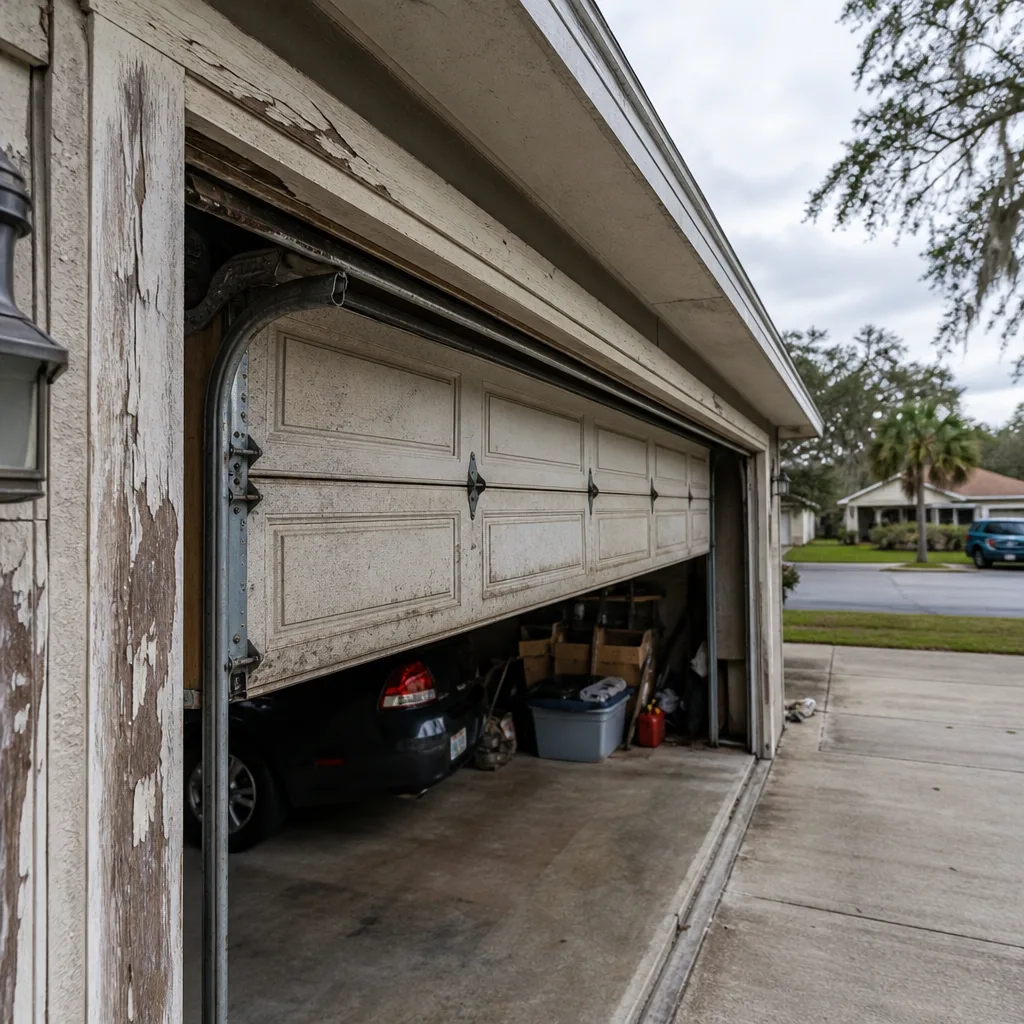 Before
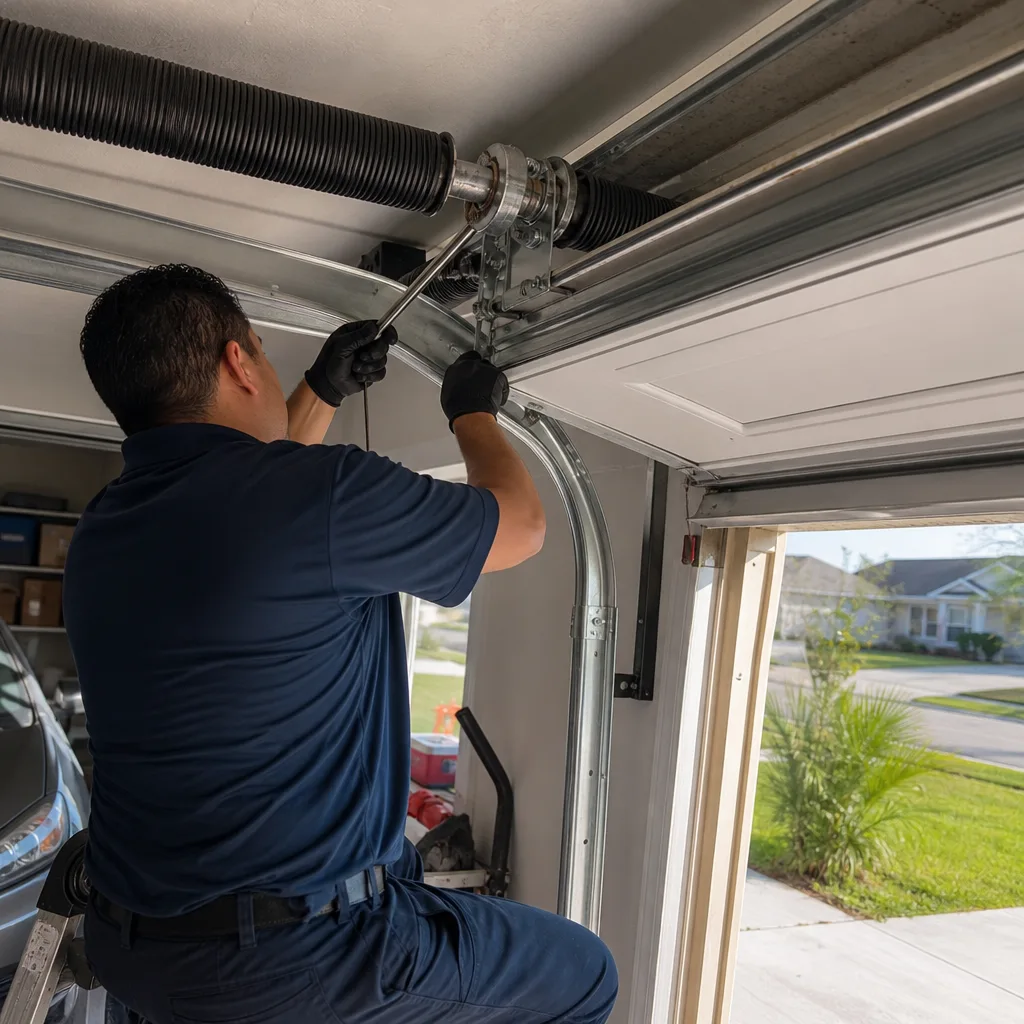 After
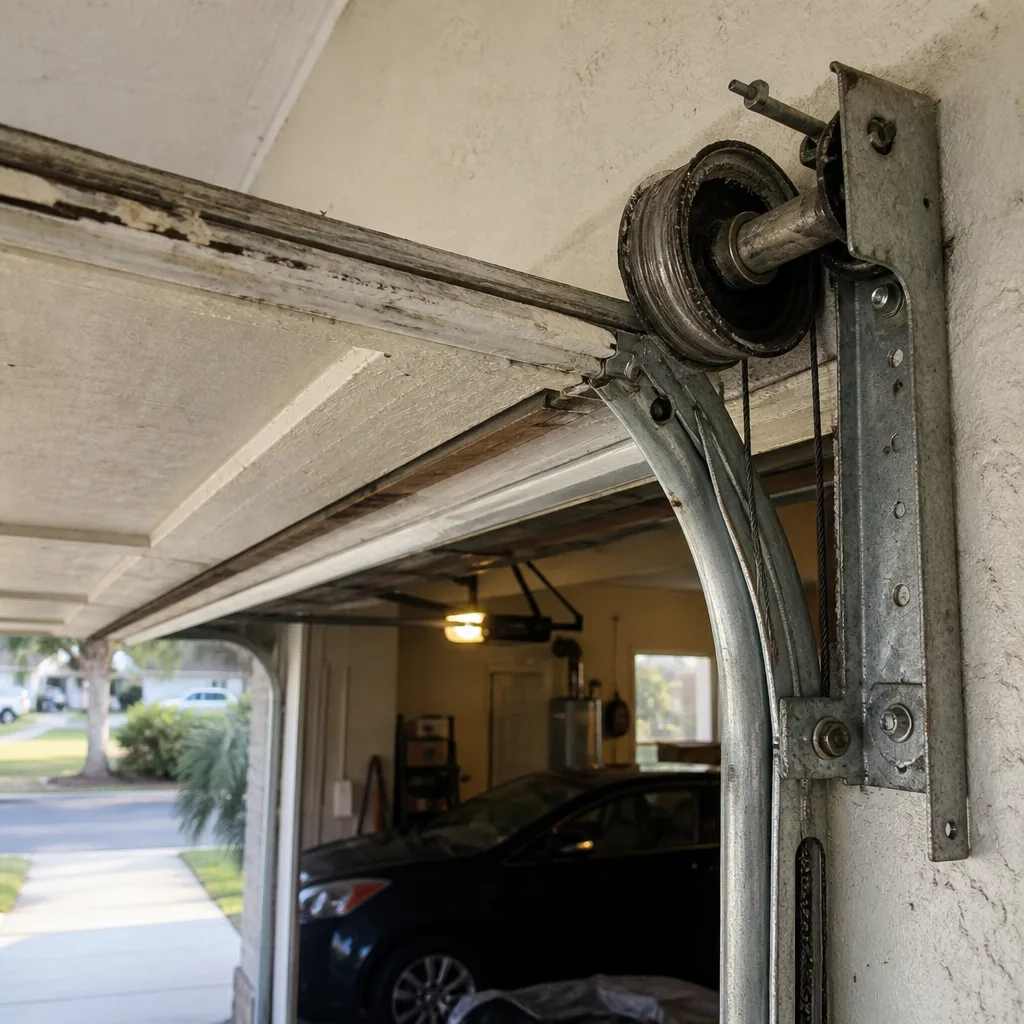 Before
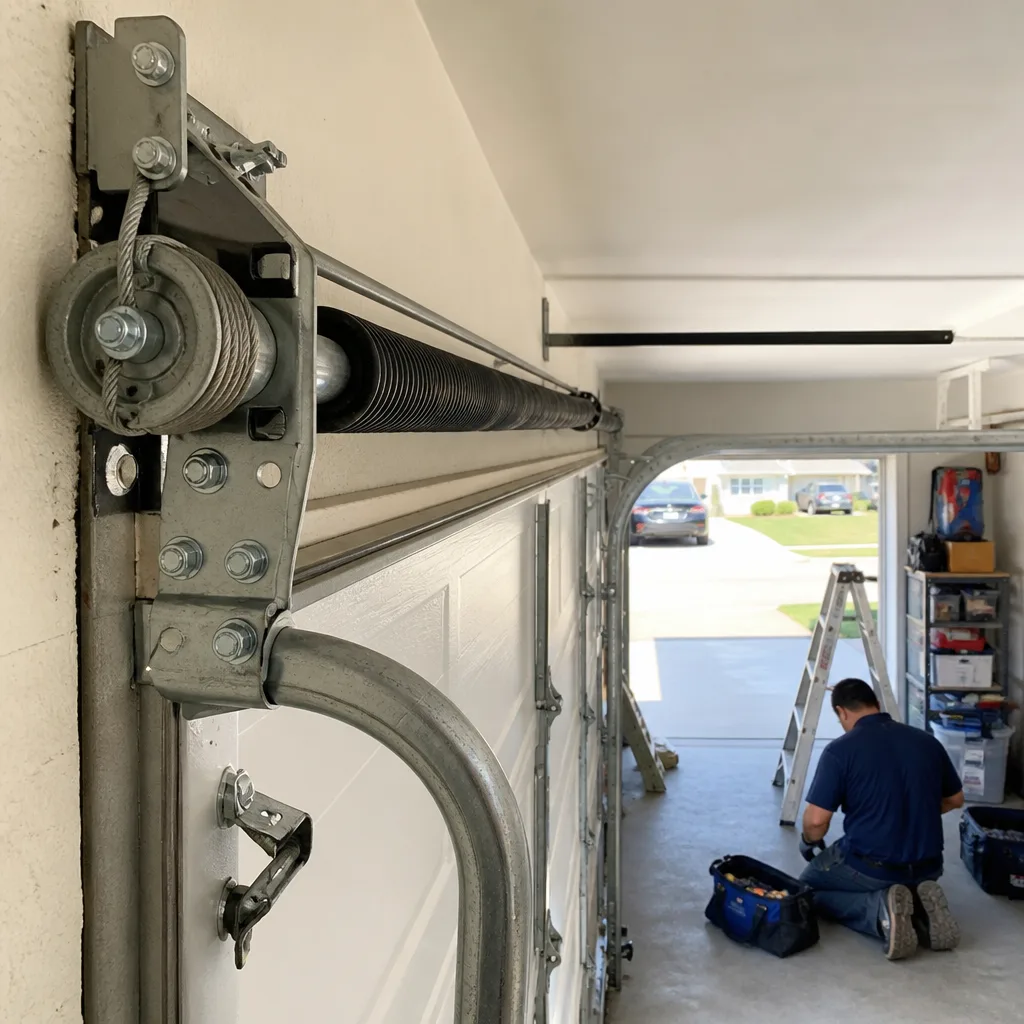 After
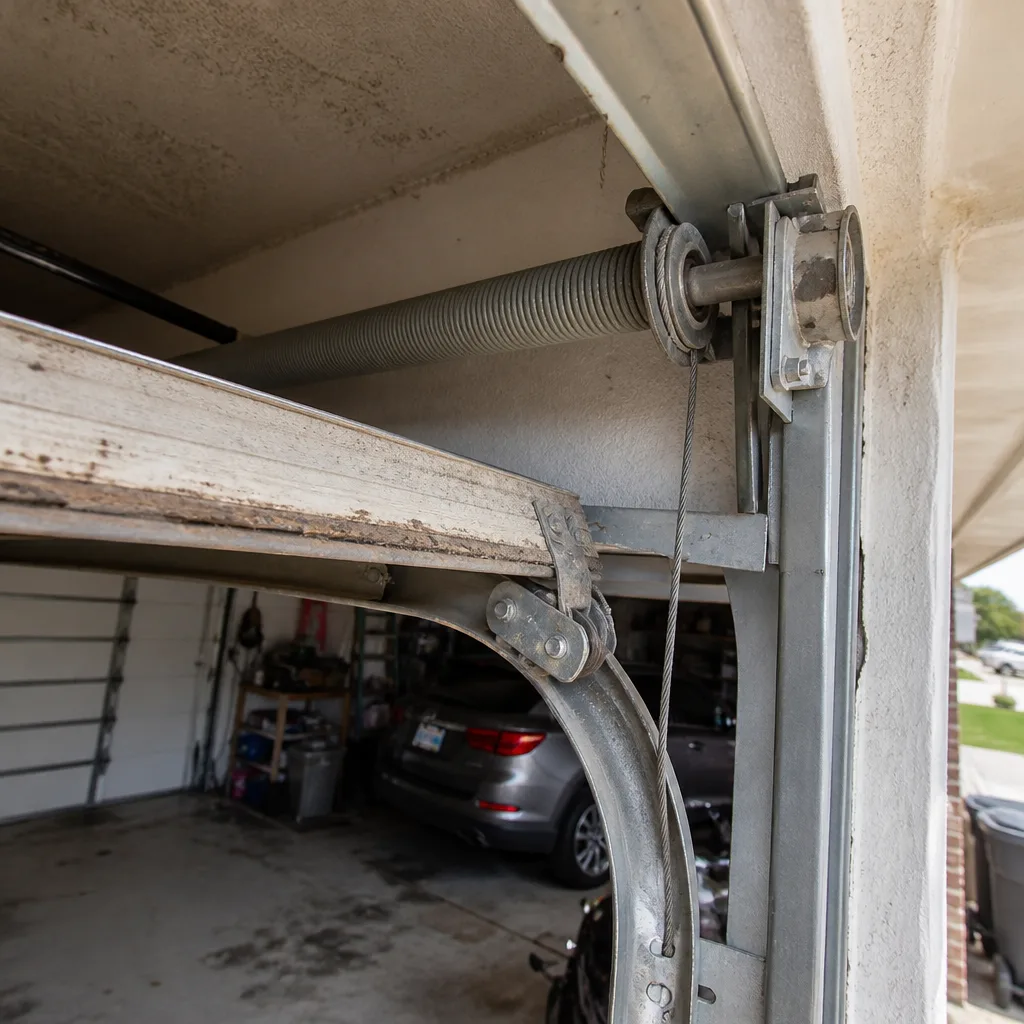 Before
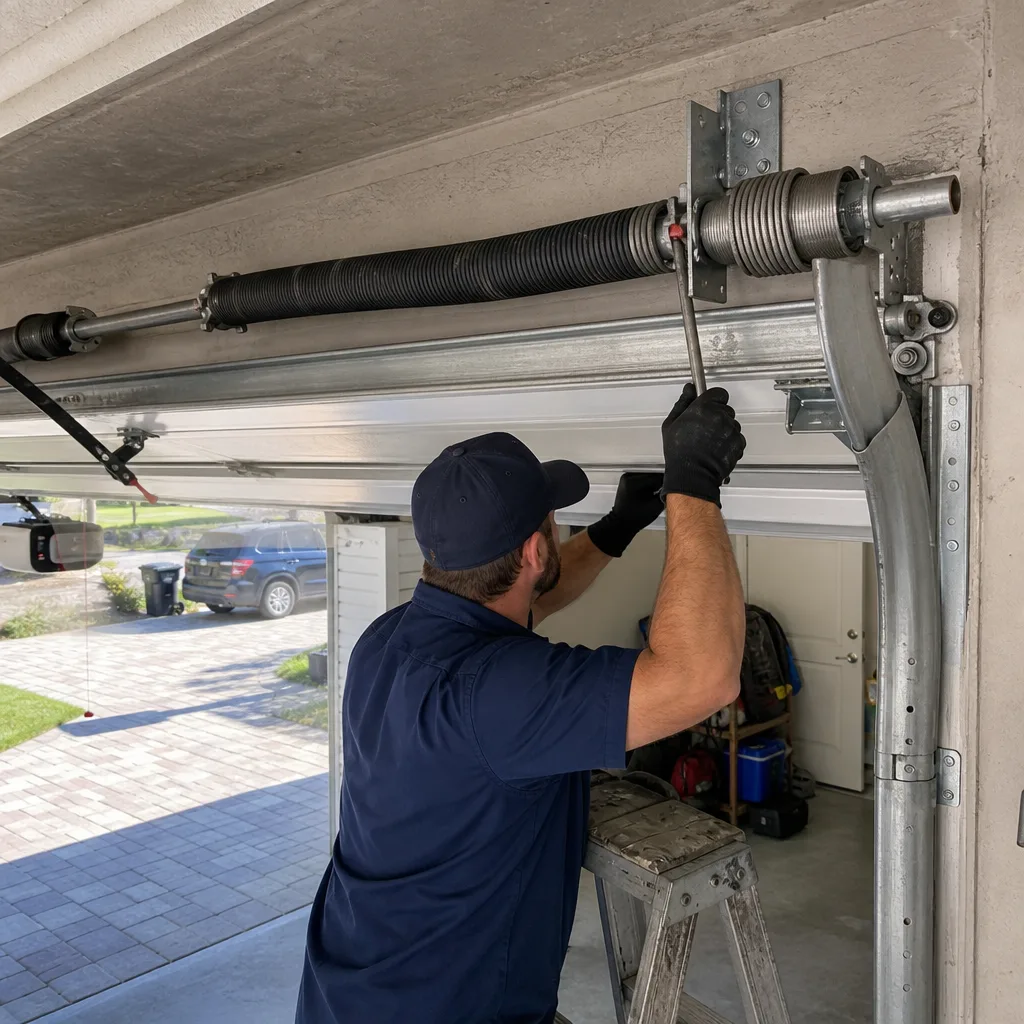 After